
The first weekend of the 2016 NCAA tournament has come and passed, and boy what a wild weekend it was. Some chaos was expected thanks to the combination of there usually being a couple surprises every year and the unpredictable nature of the regular season. But to get the finishes and results that we did exceeded the expectations of many, making for great drama.
(Discuss this in the BSL forums here.)
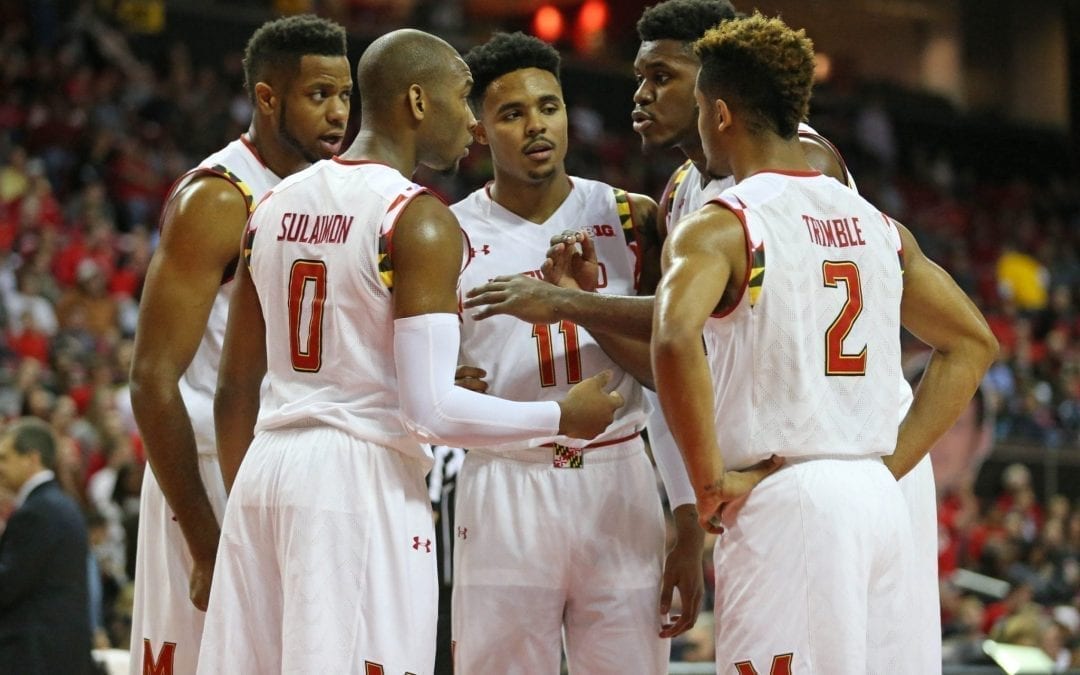
Ultimately 15 of the 16 teams that survived the carnage hail from “power” conferences, and the only exception is a Gonzaga program that’s ranked amongst the nation’s best for years now. And one of those teams is Maryland, earning the program’s first Sweet 16 appearance in 13 years. Of course there’s still more for Mark Turgeon’s group to accomplish, but it’s OK to acknowledge the step this program took in handling its business out in Spokane. Getting to the Sweet 16 is seen as an expected accomplishment for the nation’s best programs, but as this weekend showed nothing is given.
Take Michigan State for example. Entering the NCAA tournament Tom Izzo’s team was hailed by many as a favorite to not only get to the Final Four but win the whole thing. All it took was 40 minutes to end those thoughts, as the Spartans ran into a Middle Tennessee team that matched up better with Denzel Valentine and company than many of us were willing to acknowledge. As the saying goes in a certain Jay Z song, “it was all good just a week ago.” With the celebration of a Sweet 16 appearance comes the understanding that the going gets really tough at this point, as teams have more time to scout opposition while also having a weekend’s experience at an NCAA tournament site under their belts collectively.
And for Maryland the next test will be their toughest to date, as they’ll face South Region top seed (and top overall seed) Kansas Thursday night in Louisville. Bill Self’s Jayhawks have won 15 of their last 16 games, a run that coincides with the decision to install big man Landen Lucas as the team’s fifth starter. That move, which was in part sparked by conversations with the other four starters, has solidified the rotation for the Jayhawks while giving them a front court presence who can focus on defending and rebounding with the other four starters providing the offense. Guards Frank Mason III, Wayne Selden Jr. and Devonté Graham have led the way on the perimeter, while senior forward Perry Ellis anchors a front court that has depth, experience and talent.
Below are some thoughts on the Jayhawks, and how Maryland will look to advance to the Elite Eight for the first time since their national title run in 2002.
Kansas (32-4, 15-3 Big 12)
Common Opponents
Michigan State: Kansas played the Spartans in the second game of the season, falling 79-73 at the Champions Classic in Chicago. Denzel Valentine was the difference in that game, accounting for 29 points, 12 rebounds and 12 assists for Michigan State. Maryland lost both meetings with Michigan State, falling 74-65 in East Lansing January 23 and 64-61 in the semifinals of the Big Ten tournament.
Connecticut: Both teams beat the Huskies by double digits this season. Maryland handled UConn 76-66 at the Jimmy V Classic December 8, and Kansas eliminated the Huskies from the NCAA tournament Saturday by the final score of 73-61.
Kansas has four players averaging at least 11.4 points per game, with the aforementioned Ellis leading the way at 16.9 per contest. All four are starters, and their ability to score from anywhere on the court is why the Jayhawks can afford to have their “center” in Lucas be a player who’s far more valuable from a defensive and rebounding standpoint. They share the basketball and with one of the game’s best strategists on the sidelines the Jayhawks get themselves good looks on a regular basis as well. Kansas ranks fifth nationally in field goal percentage at 49.6 percent, and their three-point percentage of 42.3 percent ranks third nationally. Kansas will use ball screens but they’ll also use motion off the ball offensively, which along with the talent makes them a tough cover for many defenses.
The bench is chock full of talent, but things haven’t exactly shaken out the way outsiders may have expected before the season began. Freshmen Carlton Bragg Jr. and Cheick Diallo arrived on campus amidst much fanfare, but thanks to the learning curve and Diallo’s early eligibility issues neither has managed to earn significant minutes in the Kansas rotation. Bragg’s averaging nearly nine minutes per game, and at this point he’s simply at the stage of playing hard and remembering his assignments on both ends of the floor, while Diallo’s on the outskirts of the Kansas rotation.
Kansas essentially goes eight deep with experienced players such as forward Jamari Traylor and guard Brannen Greene earning many of the bench minutes. Traylor, like Lucas, is an aggressive rebounder and defender who has a clear understanding of where he needs to be on the floor. Greene is a 6-foot-6 wing who rates among the team’s best perimeter shooters, and after an early-season episode that resulted in a five game suspension the junior has embraced that role of giving Kansas an offensive boost off the bench. Rounding out that group is sophomore guard Svi Mykhailiuk, a 6-foot-8 native of Ukraine who has the tools needed to put points on the board in a hurry.
The understanding of what Self wants has factored into the team’s defensive performance as well, as they allow opponents to shoot just 39.7 percent from the field and 32.8 percent from three. The Jayhawks are one of four teams ranked in the top ten in both adjusted offensive (tenth) and defensive (fifth) efficiency per Ken Pomeroy’s numbers, with North Carolina, Villanova and Virginia being the others. Defensively the Jayhawks play man-to-man, which is straightforward enough, but their discipline results in opponents getting few open looks. And they’re also good on the boards, something that hasn’t always been the case for Maryland this season. Robert Carter Jr., Diamond Stone and the rest of the Maryland front line will need to hold its own in the paint if the Terrapins are to have a shot at beating the Jayhawks.
Kansas is a good offensive rebounding team, grabbing 32.7 percent of their misses, and against UConn the Jayhawks’ dominance of the boards resulted in two first-half runs (13-0 and 19-0) that essentially ended the game before halftime. The keys for Maryland Thursday night: completing defensive possessions with a rebound, and remaining disciplined on the offensive end of the floor. The Terps have shown the ability to do these things in spurts throughout the season, but doing so consistently will be critical against Kansas.
The Other Sweet 16 Matchup: No. 2 Villanova vs. No. 3 Miami
The Wildcats and Hurricanes meet in the first game of the night in Louisville. Villanova entered the tournament saddled with questions as to whether or not they’d be able to get over the hump, as they lost in the Round of 32 in each of their last two trips to the NCAA tournament. Jay Wright’s team took care of business in Brooklyn, beating both UNC Asheville and Iowa by convincing margins. The backcourt is once again strong, led by senior Ryan Arcidiacono, junior Josh Hart and freshman Jalen Brunson, but the front court shouldn’t be overlooked either. Kris Jenkins has emerged as a threat offensively over the last six weeks or so, and senior Daniel Ochefu serves as the defensive focal point. Add in a bench that includes forward Darryl Reynolds and guards Phil Booth and Mikal Bridges, and the Wildcats have the tools needed to make their first Final Four appearance in seven years.
As for Jim Larrañaga’s Hurricanes, they’re an experienced and athletic team that doesn’t lack for toughness either. Seniors Sheldon McClellan and Angel Rodriguez work well together, with the latter serving as the barometer for team success. When “Good Angel” is on the court Miami’s incredibly tough to beat. But when he struggles with decision-making and turnovers, the Hurricanes can look quite ordinary. They’ve got length and athleticism on the wings, and front court stalwarts Tonye Jekiri and Kamari Murphy lead the way defensively. Miami’s bigs move so well that it’s tough to exploit them in ball-screen situations, one reason why they built such a large lead in the first half of their win over Wichita State on Saturday.

BSL Analyst
Raphielle’s been writing about college sports for more than a decade, making the move to college basketball alone in 2013. Beginning his work with the former website CollegeHoops.net in 2003, Raphielle spent 3 years writing for NBCSports.com beginning 2013, covering CBB and the Olympics. In 2016, Raphielle joined Heavy.com. If there’s a game on, there’s a strong likelihood that he’s watching it.