
The NFL hiring cycle operates in a predictable manner. Whatever teams most recently carved out an edge over their opponents will see their coaching staffs pillaged by other franchises hoping that the assistants can replicate that success in a new location. A few hires will perform well for their new employers while most will fall out of favor within three seasons and the cycle begins anew.
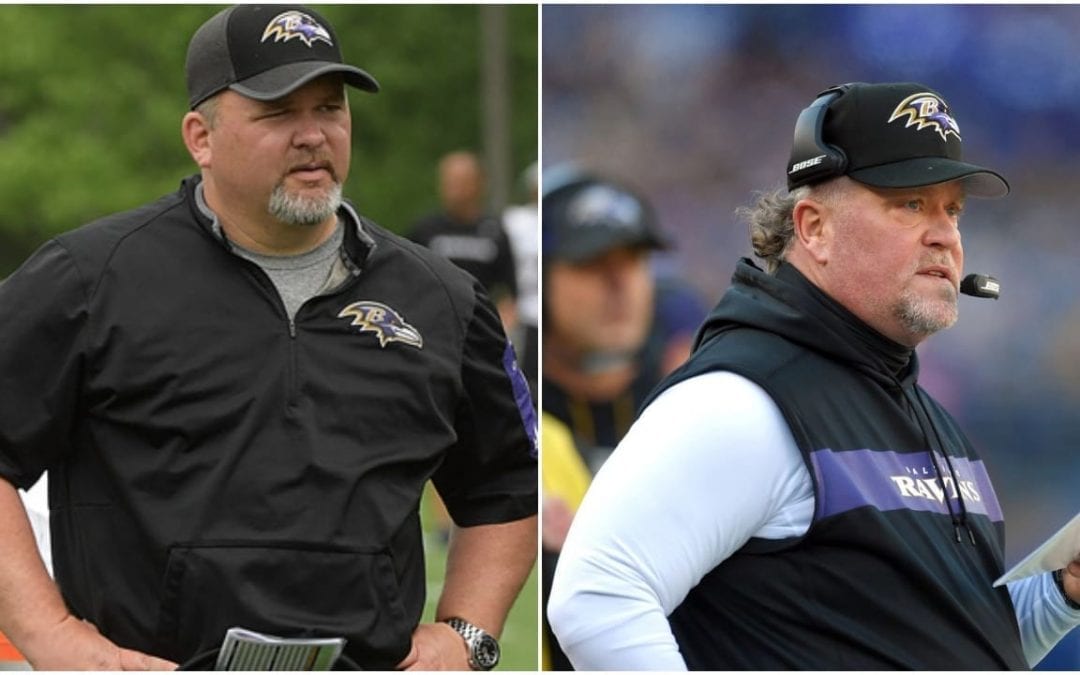
The Baltimore Ravens appear to have avoided that fate coming off a spectacular 2019 regular season, though only by the narrowest of margins. Offensive coordinator Greg Roman and defensive coordinator Don “Wink” Martindale interviewed with the Cleveland Browns and New York Giants, respectively. The Giants eventually selected New England Patriots special-teams coordinator Joe Judge as their new head coach while the Browns reportedly have narrowed their focus to Minnesota Vikings offensive coordinator Kevin Stefanski, San Francisco 49ers defensive coordinator Robert Saleh, and Patriots offensive coordinator Josh McDaniels, leaving both Baltimore assistants on the outside.
“Am I disappointed? Sure,” Martindale told reporters Wednesday. “But I feel I’m playing with house money. Look where I’m standing.”
[Discuss this article on the BSL message boards]
While the apparent return of Roman and Martindale represents a win for the Ravens, the NFL’s interest in the two likely won’t end with this hiring cycle. Twenty-two teams have conducted at least one coaching search since 2017, an astonishing 68.8% of the league. Such overwhelming turnover among the coaching ranks in such a short period of time has thinned the pool of candidates considerably, leaving few attractive candidates left for new openings. In that environment, successful assistants like Roman and Martindale can expect to receive plenty of opportunities to run their own clubs in the not-too-distant future.
Other factors probably contributed to Roman and Martindale missing out on the available head-coaching positions. With the Ravens securing a first-round bye in the playoffs, suitors couldn’t as easily interview the team’s assistants as they could with most other candidates. And after several years of franchises prioritizing hot young offensive coaches, the 2020 cycle brought the rise of the retreads. Most of the hires made thus far have previous head-coaching experience, whether in the NFL or college, something neither Roman nor Martindale possesses. (Judge did not.)
Regardless, that development will reverse in the near future, as the league typically moves from one trend to the next within a matter of months. Meanwhile, Roman will presumably continue to orchestrate the most exciting offense in football through the playoffs and into next season while Martindale will coordinate a defense that hasn’t finished worse than fourth in DVOA under his watch.
The extended stay in Baltimore could have other benefits for Roman and Martindale’s future candidacies. They will spend at least one more season working alongside John Harbaugh, one of the best models of the CEO-styled head coach in professional football. Though Harbaugh doesn’t call plays or have an extensive technical background outside of special teams, he has built an environment where analytical ideals can thrive and players almost always end up in the best positions to succeed. That approach has directly led to the Ravens’ impressive on-field performance this season and allowed Lamar Jackson to transform from a talented-if-raw rookie to the presumptive league MVP one year later.
And that head-coaching style could appeal to other teams as the list of available offensive gurus continues to shrink. For whatever non-play-calling coaches like Harbaugh lack, they allow for their organizations to pivot more efficiently when one schematic approach falls out of favor and others rise. Roman and Martindale can pitch themselves as having similar leadership qualities while also possessing extensive play-calling backgrounds upon which to lean when necessary, an attractive combination to prospective employers.
The return of Roman and Martindale will benefit the Ravens as well. In addition to providing their services in 2020, the extra time allows Harbaugh to prepare for their eventual departures whenever they occur. The loss of assistants affects some coaches more significantly than others. While Bill Belichick has overcome the year-to-year raiding of his coaching staff, Doug Pederson has struggled to maintain consistency in the time since Frank Reich and John DeFilippo left the Philadelphia Eagles. Perhaps Harbaugh has already earmarked certain coaches on his staff for coordinator roles in the future, but he might well have to look outside the organization when the time arrives.
In any event, Harbaugh knows his staffers will leave at some point if the team continues to thrive. As the Ravens’ approach continues to prove successful, the rest of the league will try to steal it for themselves.

Jason B. Hirschhorn is an award-winning sports journalist and Pro Football Writers of America member. He has bylines at NFL.com, SB Nation, Sports Illustrated, and other outlets.