
This past Monday the Red Sox acquired reliever Adam Ottavino in a trade. Sounds totally normal, and it was except for two things. First, it was a trade between the Red Sox and Yankees and that doesn’t happen. It’s the second deal between the two teams since 1997. Second, and more germane, was what Boston gave up to get Ottavino: nothing. Technically it was “cash or a player to be named later” which is widely thought to be extremely little. In essence the Yankees gave Ottavino to the Red Sox and for their trouble, Boston also received a pitching prospect, Frank German, a projectable pitcher who pitched most recently in High-A. The deal was a salary dump with the Red Sox taking on most of Ottavino’s salary and getting German for their trouble. It’s a way of buying in this case a prospect and also getting a good if possibly slightly overpaid player as well. Which got me thinking: Why don’t the Orioles do that?
To be clear, this is just something I thought of. Nobody anywhere has suggested that the Orioles are going to do it. But they should! For a while the Orioles were in their ‘lose as many games as possible’ phase of their rebuild, but with Ryan Mountcastle, Austin Hays, D.J. Stewart, Dean Kremer, and Keegan Akin all up, and with more prospects on the way, that phase is over. This new phase is going to be sorting out which of these prospects are important parts of the Orioles future, and in order to do that, there’s going to have to be some baseball game winning.
That brings me back to the original idea. The Orioles are still trying to build a farm system, and if they’re going to be winning a bit more, they’re going to have to find other ways to build up the talent base in the organization beyond being horrible and getting rewarded for it come draft time. One way to do that is to take on bad contracts. This would be a smaller way, maybe one or two deals, but it could bring in both reasonable prospects and tradable assets who could potentially be flipped for more reasonable prospects. Baltimore certainly isn’t going to spend to the luxury tax threshold of $210 million this season whether they take on bad contracts or not, but they also have an awful lot of room to go before they get anywhere near it.
For taking the last year of Adam Ottavino’s contract, the Red Sox got Adam Ottavino, who they can trade at the trade deadline if he pitches well enough if they want to, and the 24th ranked prospect in a very good farm system (somehow MLB Pipeline has him ranked 27th in Boston’s weaker system, so who knows). That cost them about $8.5 million. Is this a dealt the Orioles should have made? Yes! But this presumably isn’t the only such deal that is out there to be made. Here are a couple interesting names that might be worth taking on with the right prospects.
Again, it’s understood the the Orioles are not interested in adding any salary in the immediate. Maybe this changes when the Orioles believe they are closer to contention? Maybe there are other considerations going on?
The purpose here is not a discussion of what is going to happen, but a suggestion that the Orioles should be exploring all ways to add young cost-controlled talent to the organization; and one of the ways they could do that is by taking on contracts others organizations would like to rid themselves of – utilizing the limited existing salary obligations the O’s currently have.
(You can discuss this on the BSL Board here.)
Kris Davis
Davis makes $16.75 million this season on the last year of a two year extension, after which he will be a free agent. The A’s aren’t up near the luxury tax threshold like the Yankees were, but they’d likely love to get that or at least some of that money off their books nonetheless. Davis was one of the better hitters in baseball in 2017 and 2018, so perhaps he can recapture his former glory and give the O’s another tradable option at the deadline, and if not, I’m sure there would be a good prospect or two in it for them if they took on the majority of Davis’s remaining deal. Davis is slightly problematic for Baltimore because of the other Chris Davis who is also a DH and the presence of a few other players who could potentially use the DH spot in 2021, but he’s an option.
Jason Heyward
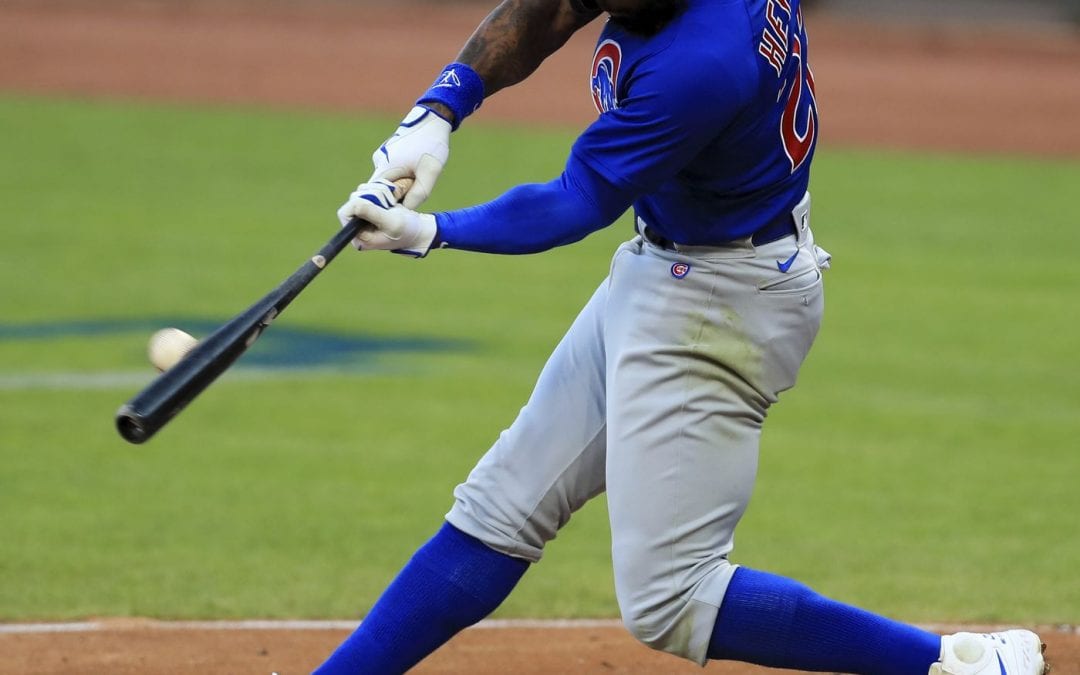
This one is kinda crazy but go with me for a bit. Jason Heyward has three years and $65 million left on his contract and the Cubs are currently trying to move anything not tied down. Heyward was a bit of a disaster as a free agent when he signed with Chicago in December of 2015, but he was actually quite good last year with the Cubs, and was reasonably good the previous year as well. This would be a lot of money to take on, presumably the O’s wouldn’t take on all of it, but you could expect some high quality prospects to come with Heyward to Baltimore if the O’s were willing to swallow his contract.
Wil Myers
Another one in the Heyward mold is Wil Myers. Myers has two years and $41 million left on his contract including a buy-out of his 2023 $20 million team option. This one could actually happen, though probably to another non-Baltimore team, as Myers has been rumored to be on the move for a year now. I wouldn’t be surprised if San Diego does move him just because of all the salary they’ve taken on this off-season. Myers is another imperfect fit for Baltimore’s roster, though he can play all over the outfield, having played 66 games in center field as recently as 2019. He’s also coming off an incredibly strong season with the bat, having hit .288/.353/.606 in the shorted 2020 campaign.
These are all assets with negative trade value, meaning the trading team would have to send along extra value with the player in order to make the deal even. In some cases, the amount of negative value taken on could potentially yield top 10 prospect or prospects. Making a trade like one of the above or a lesser version like Boston just made with New York, would increase the talent base in the organization, and shorten, ever so slightly, the timeline to win. There are of course some negative potential consequences as well, but if the deal taken on is short enough in timeline or the other team pays down the deal, then it shouldn’t impact the organization’s ability to spend when the time comes for them to do so. It’s something the Orioles in their current position should take a look at doing.

Orioles Analyst
Matthew Kory is a Orioles / MLB Analyst for BSL. He has covered baseball professionally for The Athletic, Vice Sports, Sports On Earth, FanGraphs, and Baseball Prospectus. He lives in Portland, Oregon with his wife, two boys, and his cats, Mini Squeaks and The President. Co-Host of The Warehouse.