

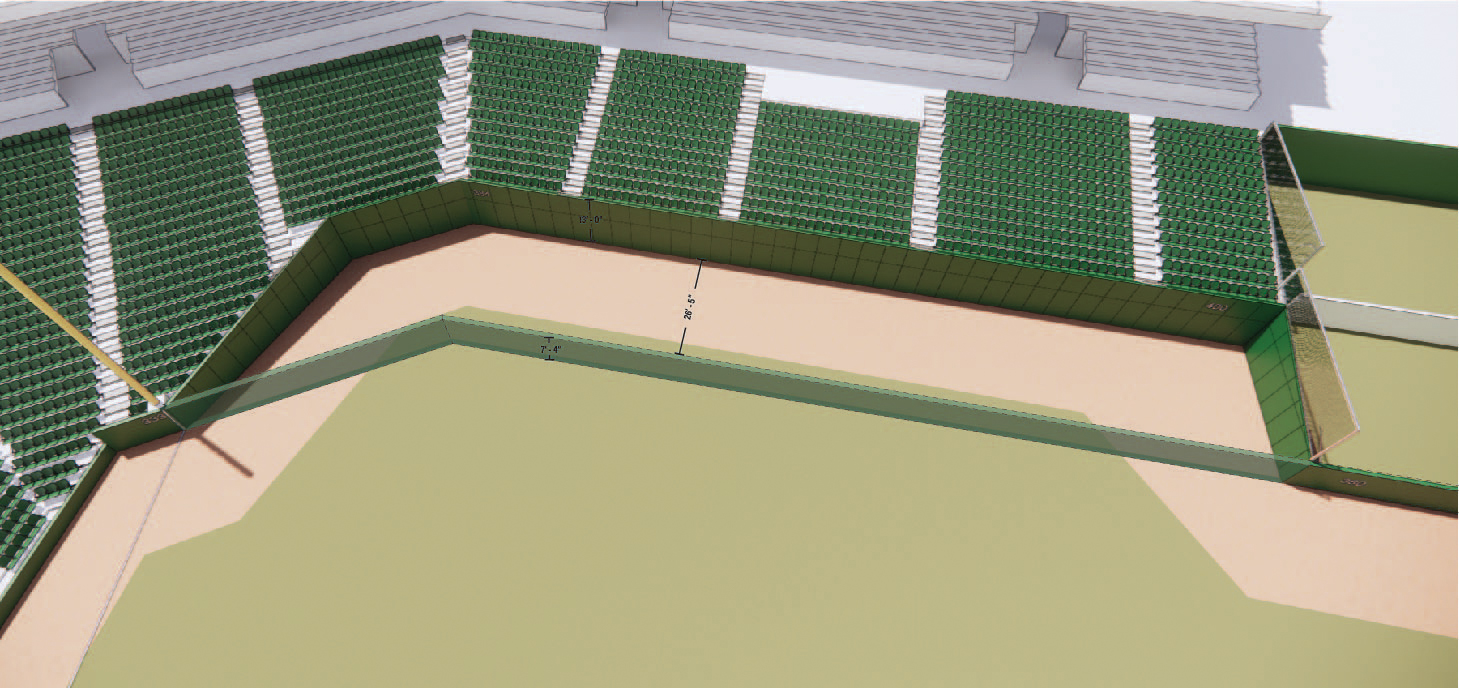
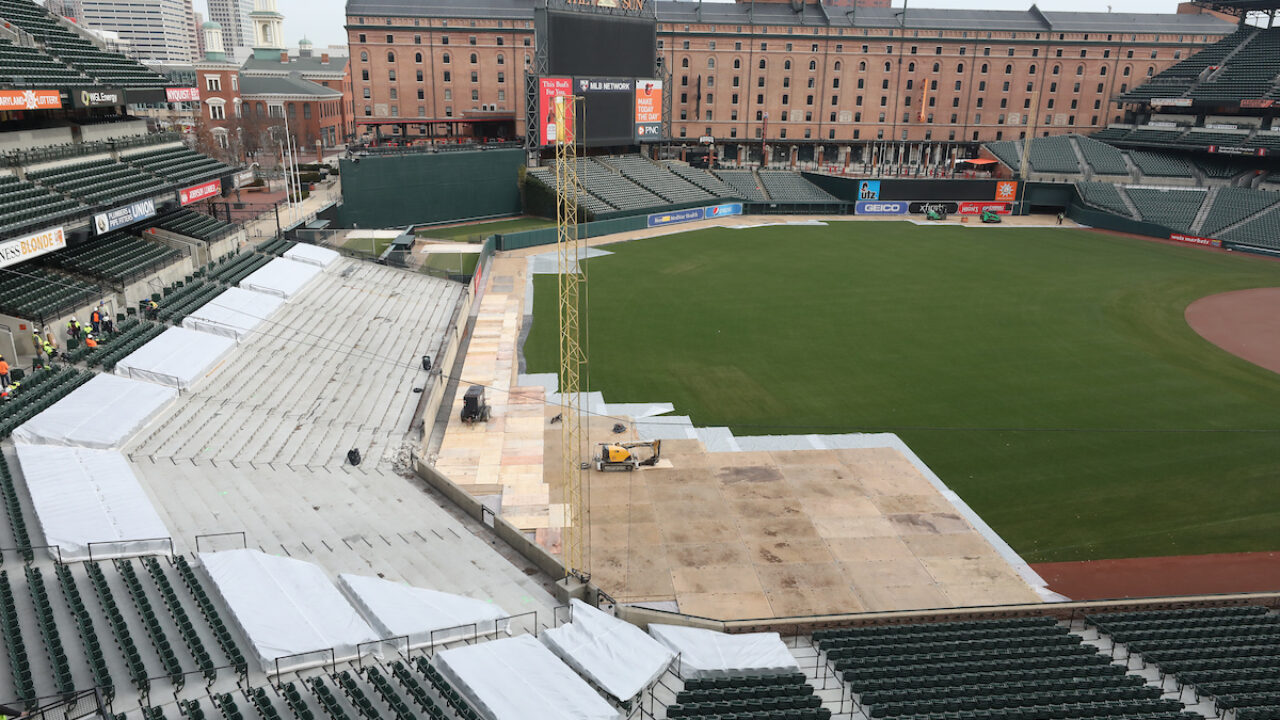
The days of Oriole Park at Camden Yards (OPACY) being the homerun mecca of the MLB may be behind us. The club has begun construction that would raise the left field wall up from 7 to 12 feet high and push it back by as much as 30 feet.
OPACY’s dimensions had remained unchanged since its opening on April 6, 1992: 333 ft down the left field line, 384 feet to left center, 410 feet to deep left center, 400 feet to center, 373 feet to right center, and 318 feet down the right field line.
Oriole Park OF Dimensions Prior To This Change:
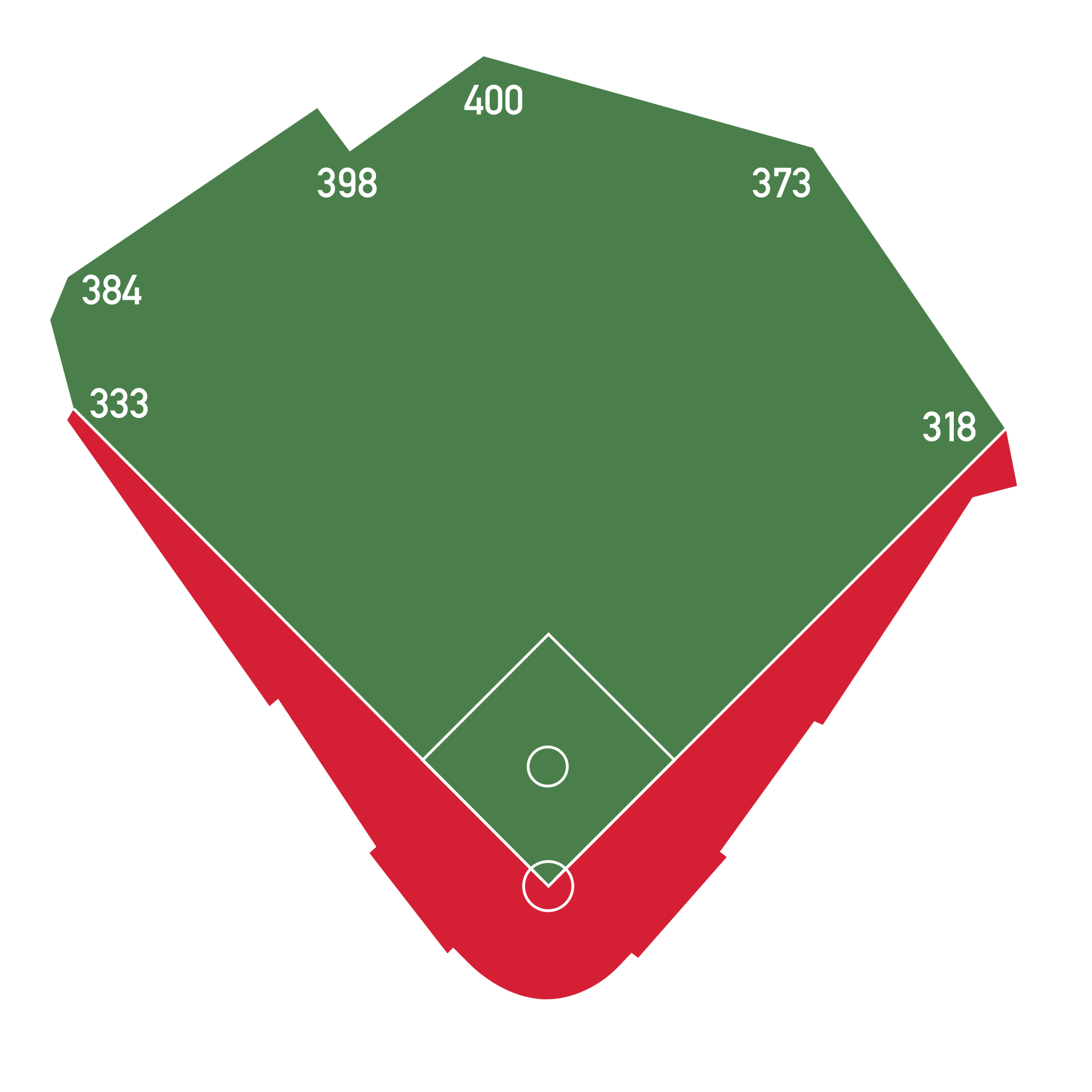
As a result of these hitter-friendly dimensions, specifically down the left field line, Orioles Park led the MLB with 277 home runs hit in 2021 and ranked second only behind the Red’s Great American Ball Park in Statcast’s HR ‘Park Factor’ metric from 2019-2021. Orioles Park’s 127 score in this metric means 27% more home runs were hit in this ballpark than in a league-average ballpark (standardized to a score of 100).

Early renders and construction images show this new-look left field, and there’s no doubt that it will make an impact, particularly on right-handed batters that pull their home runs down the left-field line. The question is just how big this impact will actually be.
OPACY New Dimensions Render:
OPACY Construction Pic:
Let’s first look at the HR spray charts and expected home runs by ballpark of the Orioles’ 4 most prolific home run hitters of last season, namely Ryan Mountcastle (33 HR), Cedric Mullins (30 HR), Austin Hays (22 HR) and Trey Mancini (21 HR).
Cedric Mullins
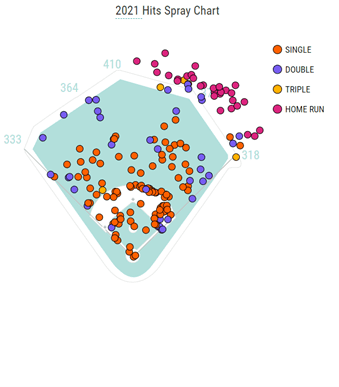

As seen by Cedric Mullins’ spray chart, this change will have virtually no impact on him. Mullins is a left-handed batter who pulls his home runs mainly to deep right-center field. Mullins’ 30 home runs last year were actually two higher than his 28 expected home runs had he played every game in Oriole Park. This means OPACY is not particularly favorable for right-field/right-center field home run hitters, especially in comparison to a ballpark like Yankee stadium. Had Mullins played all of his games in Yankee stadium, his 30 home runs would have turned into 39, courtesy of Yankee Stadium’s short porch. Fun fact: Mullins would have ranked 6th in the MLB in homers had all of his games been in Yankee Stadium. Long story short, the change to OPACY shouldn’t impact Mullins’ productivity, and let’s hope Mullins never goes to the Yankees.
Ryan Mountcastle


Next let’s take a look at the Orioles’ 2021 home run leader, Ryan Mountcastle. When looking at Mountcastle’s spray chart, it’s apparent how much he spreads the ball around. Of his 33 home runs, 8 were hit to left field, 8 were hit to left-center, 6 were hit to straight-away center, 7 were hit to right-center, and 2 were hit to right field. Because of this, Mountcastle is also relatively safe from seeing a significant dip in HR production. If we were to consider the new dimensions, it’s likely that 1 or 2 of his home runs would turn into outs, and another couple would turn into extra-base hits. This home run from last season, for example, would certainly not clear the new wall and would have turned into a double instead.
When looking at Mountcastle’s expected home runs by ballpark, we get a better idea of the favorability of OPACY for right-handed batters, although it’s fairly minor in this case. Mountcastle’s 33 home runs matched his expected 33 home runs had he played every game at OPACY, but there are certainly a few stadiums, Citizens Bank and Wrigley Field for example, where this 33 number would have been even higher. We do see that in most stadiums Mountcastle would have totaled less than 33 home runs, but only a small part of this discrepancy can be directly attributed to OPACY’s short left field. Ultimately, Mountcastle will still be a prolific home run hitter with a great chance of repeating as the Orioles’ home run leader.
Trey Mancini


Next up is Trey Mancini. While Mancini does hit a large share of his home runs to left field, he has predominantly been a dead-center home run hitter throughout his career. This was no different in 2021, as evidenced by his spray chart. Mancini’s proclivity to hit his homers to straight-away center, along with his tendency to hit ‘no-doubters’ both benefit him when considering this dimensional change to OPACY. Mancini also ranked 27th in the MLB last season with an average home run distance of 409 feet. Simply put, a change from 333 feet to 360 feet doesn’t matter when the ball is typically traveling 400+ feet.
When breaking down Mancini’s expected home runs by ballpark in both 2019 and 2021, OPACY ranks somewhere in the middle. Mancini’s 35 homers (both in actuality and in OPACY’s expected total) in 2019 could have been as many as 45 in Cincinnati’s Great American Ball Park and as few as 20 in San Francisco’s Oracle Park (AT&T at the time). It’s also worth noting how low the Coors Field totals are for every player – this is because Coors field is intentionally large to account for Colorado’s high elevation which isn’t factored into this calculation.
Austin Hays


Now we come to Austin Hays, likely the biggest potential victim of this change. Hays’ spray chart highlights his propensity for pulling home runs down the left field line. Hays also finished in the bottom 20% in average home run distance among qualified batters with an average of 390 feet. Hays’ expected home runs by ballpark also point to the favorability of OPACY on his home run-hitting tendencies. Only Dodger Stadium and Great American Ball Park would have yielded more home runs than OPACY did to Hays last season.
While this change in dimensions might hurt Hays a bit offensively, it does give him the chance to make more of the spectacular plays in the outfield that Orioles fans have come to know and love.
John Means

We’d be remiss not to mention how this change will benefit Orioles pitchers. Taking a look specifically at the hitter spray chart vs John Means last season, we see that he gave up more home runs and hits to left field than he did to right field. This difference isn’t massive but it’s certainly there. By making this area of the field a bit more forgiving, there’s hope that Orioles pitchers won’t once again lead the league in home runs surrendered.
At this point, Orioles fans have become desensitized to their pitchers giving up home runs (or at least I have). Orioles pitchers allowed the most home runs in the league in 2021 (258 HRs), 2019 (305 HRs), 2018 (234 HRs), and the second most in 2017 (242 HRs). There’s no denying that Orioles fans and management are ready for this impressive feat to come to an end, even if that means sacrificing a bit of offense.
While this change in dimension does reduce the capacity of OPACY slightly, it’s hard to make a strong case for this as a real concern for the Orioles. Oriole Park attendance just barely surpassed 10,000 fans per game last season and any small change that can improve the quality of the game and bring in more fans should be viewed as a step in the right direction.
When we think of the Orioles’ top hitting prospects, names like Adley Rutschman, Gunnar Henderson, Colton Cowser, and Heston Kjerstad come to mind. What do all of these players have in common? All of them bat left-handed. While this decision to push back left field wasn’t made just because of these prospects, it certainly helps to know that their production won’t be particularly impacted by it.

As a Baltimore native, Zach is an avid Orioles and Ravens fan. After interning for the Baltimore Orioles, he currently works as a Senior Quantitative Risk Analyst for OneMain Financial and is a part-time graduate student studying Data Science at the University of Michigan.