
In September I wrote that the collective bargaining agreement expires at 11:59 p.m. on December 1st, that transactions stop during a lockout, and that teams wanting to do business might try to do it fast. Then I wrote this:
Watch whether Elias moves early. It will tell you something.
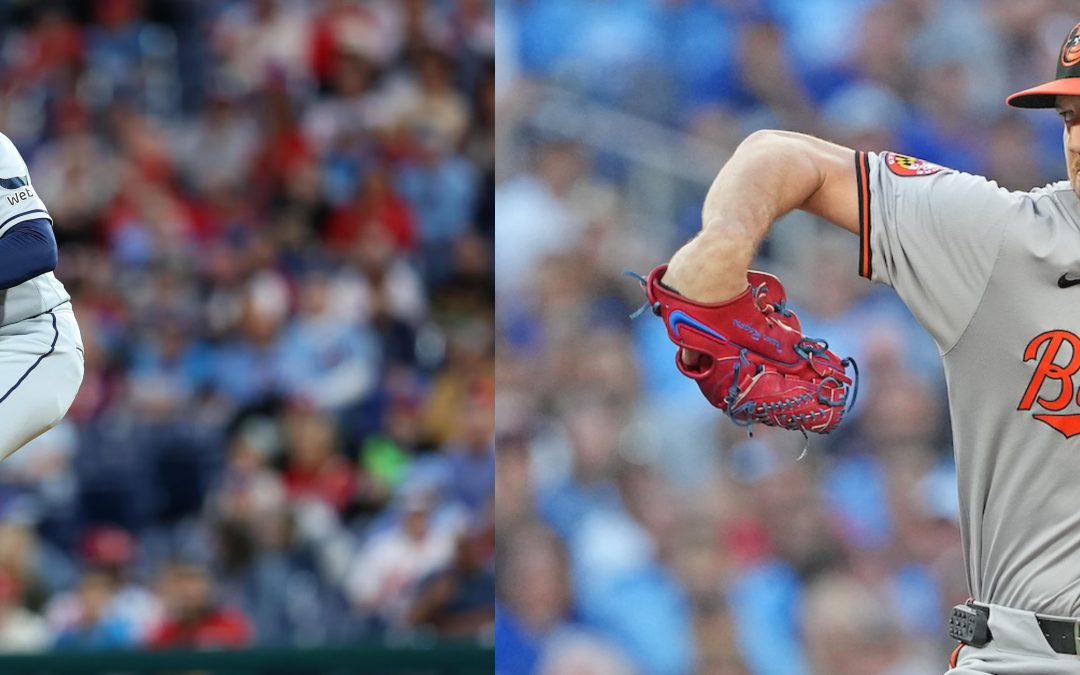
He moved early. On Monday the Cubs signed Trevor Rogers for five years and $120 million. Less than 24 hours later the Orioles agreed with Freddy Peralta for five years and $125 million — no opt-out, no deferrals, pending a physical. It is the largest free-agent contract the Orioles have ever given a pitcher, by more than double. Alex Cobb got four years and $57 million in 2018. Ubaldo Jiménez got $50 million in 2014.
So here is what it told us: this front office will spend, it will spend at the top of the market, and it will spend seven days before the door closes.
Whether it spent well is a harder question.
Multiple needs remain. There is also question of how much money exists to address those needs, and the free-agent market can’t solve any of them well.
The Two Contracts Are Not The Same Contract
Everybody is going to read these as twins. Five years, $120 million against five years, $125 million. An even swap, a $5 million rounding error, the Orioles replacing their departing left-hander with a comparable right-hander at comparable money.
That isn’t what happened.
Per David Schoenfield at ESPN, Rogers’ deal with Chicago includes deferrals that drop the present value to roughly $19 million a year. The raw number is $24 million. The real number is closer to the four-year, $76 million projection Kiley McDaniel had on him.
Peralta’s deal has no deferrals. His $25 million is $25 million.
Run that out over five years and Baltimore committed something on the order of $30 million more in present-value dollars than Chicago did.
Rogers vs. Peralta
| Trevor Rogers | Freddy Peralta | |
|---|---|---|
| Deal | 5 yrs / $120M, deferred | 5 yrs / $125M, no deferrals |
| Present value, per year | ~$19M | $25M |
| Age in 2027 | 29 | 31 (turns 31 in June) |
| Seasons purchased | 29-33 | 31-35 |
| Career MLB innings | 689 | ~1,100 |
| Throws | Left | Right |
| 2026 | 4.03 ERA, 169⅔ IP, 157 K, 39 BB, 1.18 WHIP | 4.42 ERA (4.99 with the Mets, 3.25 with the Rays) |
| Last two years | 3.16 ERA, 48 starts | 2.70, then 4.42 |
| 30-start seasons | One in six years | Four in a row |
| Draft pick | O’s receive compensation | Costs nothing |
Two of those rows are the whole argument, and they point in opposite directions.
Baltimore won the draft-pick exchange, and it isn’t close. The Orioles made Rogers a qualifying offer, he declined it, and they get a compensatory pick now that he’s signed elsewhere. Peralta was traded in the middle of his walk year, which makes him ineligible to receive a qualifying offer, which means signing him costs Baltimore nothing.
Call it a two-pick swing relative to signing any other front-line free agent. That is real value and nobody should wave it away. Hold onto it – it matters again later, because it means the draft pick is still in Baltimore’s pocket.
Everything else on that table favors Rogers. He is two years younger. He has 400 fewer major league innings on his arm. He is left-handed, which matters to a rotation that no longer has one. And he is the pitcher whose last two seasons read 3.16 across 48 starts, against a pitcher whose last two read 2.70 and then 4.42.
The Durability Argument Is The Real Argument
There is a coherent defense of this signing, and it isn’t about stuff or ceiling. It’s about showing up.
Peralta has made 30, 32, 33 and 32 starts in the last four seasons. He and Kevin Gausman are the only two pitchers in baseball who have done that every year in that span. Rogers has qualified for the ERA title once in six seasons. He had back spasms in 2022, made four starts in 2023 with a biceps problem, dislocated a kneecap in the 2024-25 offseason, and missed two weeks with an illness this past April.
Now think about the last three years of Orioles pitching. Kyle Bradish, Tommy John. Zach Eflin, Tommy John. Keegan Akin, Tommy John. Félix Bautista, two shoulder surgeries. Grayson Rodriguez, gone. Tyler Wells, gone. Ryan Helsley, 15⅓ innings for $14 million. This organization has not been able to keep pitchers on a mound, and that failure has cost it more wins than any lineup decision it has made.
If you believe the thing you most need to buy is the floor – not the ceiling, the floor – then Peralta is the most defensible purchase on the board. You are paying a premium for the only guy in the sport with a four-year streak of being available.
One caveat on that, and it’s a real one. Peralta’s durability is in starts, not innings. His last four seasons: 165⅔, 173⅔, 176⅔, and roughly the same again in 2026. That’s about 5⅓ innings per start, every year, like clockwork. Rogers gave Baltimore 169⅔ in 30 starts this season – 5⅔ a turn. So the innings are nearly identical. What Baltimore bought is reliability of the appearance, not volume of the workload.
The Part That Worries Me
Here is the number that should bother everyone, and it is not the ERA.
Peralta’s career strikeout rate is 28.6%. With the Mets this year it was 22.1%. Over his final ten appearances with Tampa Bay — the stretch everyone is buying, the one that produced a 1.82 ERA and an ALCS MVP — it was 19.5%.
He got dramatically better while striking out dramatically fewer people.
The whiff rate on the four-seamer he’s built his career on has gone 29.2% in 2023 to 22.4% in 2026. The velocity is still there at 94. The swing-and-miss is leaving.
So where did the Tampa Bay improvement come from? Two places. He walked fewer batters, which is skill and may well travel. And he pitched in front of the best defense in the playoff field.
That second part is the problem, and I want to put a number on it, because I’ve been writing about this number all fall.
Baltimore converted .688 of balls in play into outs this season. The league average was .699. The Rays were at .724 – the best mark among the twelve playoff teams. That is a 36-point gap between the defense that fixed Freddy Peralta and the defense he is now joining. Spread across a season’s worth of balls in play, an .011 gap is 45 to 50 extra hits. The gap here is three times that.
Defensive efficiency mixes fielding with the quality of contact a staff allows, so some of that 36 points belongs to Tampa Bay’s pitchers rather than its gloves. But that cuts both ways here. If the Rays’ number is partly a pitching achievement, then part of what made Peralta effective there was a staff-wide approach to contact management that he’s leaving behind. Either way, the thing that helped him isn’t in Baltimore.
And it gets more specific than team-level numbers. With the Rays, Peralta threw his four-seamer 60% of the time against a career rate near 53%, and the fastball-changeup combination accounted for more than 86% of his pitches. He became a two-pitch pitcher living at the top of the zone.
Pitches at the top of the zone become fly balls. Baltimore brought the left-field wall back in for 2025. Dylan Beavers graded at -9 Outs Above Average in the outfield this year. And the plan, as best anyone can tell, is to find Coby Mayo regular at-bats in right field, where he is likely below average too.
Put it together: the Orioles just bought a fly-ball right-hander whose recent success was built on contact management and elite defense, and dropped him into a shorter park in front of a below-average outfield.
That is not a prediction that it fails. Peralta’s postseason was genuine – a 1.08 ERA across four October outings, a velocity spike into the high 90s, a pennant. The Rays changed his windup, moved him on the rubber and leaned on the changeup, and those adjustments belong to him now. But the mechanism that produced the good version of him this year is the exact mechanism Baltimore doesn’t have.
Remember that when we get to the trade targets. It changes which pitcher you want.
The Rotation, And What’s Behind It
Here’s where the staff actually stands.
| 2026 | Status | |
|---|---|---|
| Freddy Peralta (R) | 4.42 ERA, 32 starts | 5 yrs / $125M, 2027-31 |
| Shane Baz (R) | 4.11 ERA, 179⅔ IP, 31 starts | $7.8M in 2027 |
| Kyle Bradish (R) | 4.12 ERA, 155 IP, 29 starts | $10M in 2027 |
| Brandon Young (R) | 3.56 ERA, 156⅔ IP, 28 starts | Pre-arbitration |
| Open | Povich, Gibson, De León |
Bradish is the good news nobody noticed. The September injury that produced “everything is on the table” language turned out to be a lower abdominal problem – a sports hernia, repaired surgically, and he should be ready for spring training. For a pitcher with $90 million guaranteed and a Tommy John two years behind him, that is about the best possible version of that scare. I expect Bradish to take a leap in ’27, after getting his legs back under him in 2026.
Brandon Young’s 3.56 over 156⅔ innings was the best mark on the staff and the most underrated development of the season. You could argue he’s legitimate mid-rotation starter making the league minimum. At the minimum, I feel very comfortable going into ’27 with him as the 5th starter.
So the rotation is four right-handers and a vacancy, with three unproven options in front of it:
| 2026 | Note | |
|---|---|---|
| Cade Povich (L) | 4.38 ERA, 37 IP, 7 starts | The only left-handed option with MLB starts |
| Trey Gibson (R) | 6.13 ERA, 39⅔ IP, 8 starts, 27 walks | No. 17 prospect |
| Luis De León (L) | 1.93 ERA, 9⅓ IP, relief only | No. 8 prospect |
Help is coming.. MLB Pipeline tags Anthony Eyanson, Joseph Dzierwa and Caden Hunter at 2027, and all three finished the year in Double-A. Two of the three are left-handed, which is the exact shape of what’s missing. Second half is the realistic window on any of them.
| Rank | Player | Level | ETA |
|---|---|---|---|
| 2 | Anthony Eyanson (R) | AA | 2027 |
| 3 | Joseph Dzierwa (L) | AA | 2027 |
| 4 | Caden Hunter (L) | AA | 2027 |
| 10 | Michael Forret (R) | MLB | 2027 |
| 12 | Kyson Witherspoon (R) | A+ | 2028 |
| 14 | JT Quinn (R) | AA | 2028 |
But “realistically the second half” is not a plan. No club goes into a season trying to contend counting on three Double-A arms to arrive, and no club should go into one counting on Povich, Gibson and De León to hold the fifth spot until they do. Another starter still has to be acquired. The prospects only decide whether you acquire him for one year or five.
And here’s the uncomfortable summary: the Orioles spent record money and the rotation did not improve. Baltimore ranked 17th in rotation ERA. They lost Rogers and Chris Bassitt out of last year’s five, added one pitcher, and still have a hole. Schoenfield’s verdict – “basically an even swap of Rogers for Peralta, which won’t change the projection for the club” – is the right one. Peralta has the higher ceiling. The group around him is the same group.
The One Market Fact That Should Drive Everything
Here is MLB Trade Rumors, setting up their offseason trade-candidate list:
There might also be a runoff boost to the trade market from one of the weaker free agent classes in recent memory, especially on the position player side. Teams that need offense are going to be hard-pressed to find it without going to the trade front.
Bats are scarce this winter. Baltimore’s surplus is bats. And the clubs holding the pitching Baltimore needs – Seattle, the Yankees, Minnesota, the Angels – are all explicitly shopping for offense.
That is potential opportunity.
Where It Actually Stands
I had roughly $126 million committed for 2027 once the roster filled out. Peralta takes that to about $151 million. Baltimore opened 2026 at $170 million.
| Committed, roster filled out | ~$151M |
| 2026 Opening Day payroll | $170M |
| Room at a flat payroll | ~$19M |
| Room at $190M | ~$39M |
The four needs after Peralta:
- A fifth starter, ideally left-handed
- A catcher who can play 60-plus games
- One high-leverage reliever
- A right-handed outfielder who hits left-handed pitching and can defend
Nineteen million dollars does not cover four jobs on the open market. It covers one and a half.
And the free-agent board just got worse in two specific ways. Ryan Jeffers accepted Minnesota’s qualifying offer – the catcher I had hoped to obtain. David Bednar accepted the Yankees’. Of the two relief targets I’d identified, one is gone.
The good news is the one I asked you to hold onto. Because Peralta carried no qualifying offer, Baltimore still has its draft pick to spend. Adrian Morejon costs one. The Orioles can now afford to pay it.
What Else Is Already In The Building
Enrique Bradfield Jr., is the glove-first, elite-speed center fielder that would change the O’s OF defense if he was holding down CF, and Cowser was moved back to LF.
Unfortunately Bradfield has struggled to stay on the field at AAA, and there are real questions about if he can get on-base at a high enough clip in the Majors to take advantage of his strengths.
He is also left-handed, which is the half of the problem he doesn’t solve. The need I identified was a right-handed outfielder who hits lefties and can cover center. Bradfield is the glove without the bat side. Keep that in mind in a minute.
Need One: The Fifth Starter, Ideally A Left-Hander
The free-agent options are thin and mostly old. Casey Mize is still unsigned and was the $18 million starter in my Option 1. Shota Imanaga is the more interesting one – a left-hander with a 3.45 ERA across 86 starts in three seasons, elite walk rate, and already QO-ineligible because he accepted one last winter, so no pick cost. The catch is that he has allowed more home runs than walks in his career, which in this park behind this defense is the same worry as Peralta with the handedness flipped.
The trade market is far better, and this is where the surplus goes to work.
| Target | Club | Control | 2027 $ | The case |
|---|---|---|---|---|
| Ryan Weathers (L) | Yankees (AL East) | Through ’28 | ~$3.1M | 3.60 ERA, 137⅓ IP, 25 starts, 23.6% K, 6.7% BB, 47.2% GB |
| Reid Detmers (L) | Angels | Through ’28 | ~$7.5M | 3.36 ERA, 185 IP, all 32 starts, 28.5% K; 1.89 after the break |
| MacKenzie Gore (L) | Rangers | One year | ~$8.7M | 4.17 ERA, K rate slipping; Orioles named a fit |
| Carmen Mlodzinski (R) | Pirates | Through ’29 | ~$1.6M | 123 IP, 3.95 ERA, 42.6% GB; Orioles named a suitor |
| George Kirby (R) | Mariners | Through ’28 | ~$9.8M | 4.33 ERA, 20% K, bad outside T-Mobile; velo up to 97 |
| Yusei Kikuchi (L) | Angels | One year | $21M, Angels pay down | 14 starts, shoulder inflammation; buy-low |
Weathers is the best fit on this entire list for Baltimore’s specific problems, and it isn’t close. He’s a left-hander. He’s 26. He has three years of control at $3.1 million. And he generated ground balls on 47.2% of batted balls – which is the direct antidote to the thing I spent the first half of this piece worrying about, namely a fly-ball staff in a park with a shortened left-field wall in front of a below-average outfield.
If you accept the Peralta critique, you don’t just need another starter. You need a starter whose contact profile points the other way. Weathers and Mlodzinski (42.6% ground balls) are the two names on that board who do.
The reason to think it’s gettable: MLBTR notes the Yankees are so deep in rotation options that they’d listen, and that a deal could be built around “an established big league bat to plug into the lineup at a position of need (e.g. third base, catcher, second base).”
Baltimore has established big league bats at third base and second base it does not have room for. New York has a left-handed groundball starter it doesn’t have a spot for. On paper, that is the trade.
Now the part that probably kills it. The Yankees are in the division. Intra-division trades do happen, but they often occur at a premium – the buyer pays extra precisely because the seller has to justify helping a rival. Brian Cashman has plenty of other bidders and no reason to take Baltimore’s.
So treat Weathers as the profile to go find rather than the player to expect. Same caveat on Rasmussen, who belongs to Tampa Bay.
Which makes Carmen Mlodzinski the quietly realistic version of this idea. He’s right-handed, so he doesn’t fix the handedness problem. But he’s in the National League, he ran a 42.6% ground-ball rate across 123 innings at a 3.95 ERA, he’s projected at $1.6 million with control through 2029, and MLBTR named the Orioles among his likely suitors. Pittsburgh has Paul Skenes, Braxton Ashcraft, Jared Jones, Bubba Chandler and Mitch Keller ahead of him and no rotation spot to give him.
The fifth starter who actually gets acquired probably looks more like Mlodzinski than Weathers. That’s an acceptable outcome. A groundball arm at $1.6 million with four years of control is a real answer to the park, and it leaves the left-handed question to Dzierwa or Hunter in July – which is exactly what those two are for.
Detmers is the upgrade if they want to pay for one. Thirty-two starts, 185 innings, a 28.5% strikeout rate, and a 1.89 ERA over his final 13 starts. He’s a legitimate No. 2. He also costs a headliner in the top 25-50 of the prospect world plus surrounding talent, because that’s what the Angels got for José Soriano. That is a real price, and it’s the price you pay when you want the pitcher instead of the lottery ticket.
Drew Rasmussen is the fantasy. 172 innings of 2.67 ERA, likely top-five in Cy Young voting – and MLBTR’s read is that the Rays have never carried a $20 million player and probably won’t keep him. One year of control, for a club trying to win in 2027.
Need Two: Catcher
Jeffers is gone. The free-agent board behind him is barren. This becomes a trade, and there are more options than people realize.
| Target | Club | Control | 2027 $ | Note |
|---|---|---|---|---|
| Jimmy Crooks | Cardinals | Through ’32 | Pre-arb | Elite defensive rep, huge Triple-A numbers, .168 in 67 MLB games |
| Shea Langeliers | Athletics | Through ’28 | ~$8.7M | 23 HR in 106 games, .262/.328/.474; plus-plus arm, weak receiver |
| Hunter Goodman | Rockies | Through ’29 | ~$6.2M | 41 HR, 43 of them on the road since ’25; 30.5% K, .310 OBP |
| Iván Herrera | Cardinals | Arb | — | Bat-first, part-time catcher; coming off a down year |
Crooks is the one that fits like a glove, and for a reason that should be obvious to anyone who read the last two months of this site. MLBTR: “It’d make sense for the Cardinals to look to swap Crooks for upper level starting pitching.”
Baltimore has upper-level starting pitching in surplus. JT Quinn, Kyson Witherspoon, one of the two Double-A left-handers. The Cardinals are blocked at catcher by Leo Bernal and Rainiel Rodriguez. Crooks is pre-arbitration and controllable through 2032, has a strong defensive reputation, and carries exactly the profile you want backing up Basallo: a glove you trust while also having some stick, even though he’s yet to hit in the Majors.
The O’s likely believe Carlos Narvaez will bounce back offensively. I think that’s fair.
I’d still like to add someone ahead of him.
If they want the bat instead of the glove, Langeliers is the name. Twenty-three homers in 106 games around a meniscus tear, two years of control. I believe he’s regarded as having a strong arm, but a weak receiving reputation.
Goodman is the one I’d avoid at the ask. Forty-one home runs is real and the road split proves it isn’t Coors. But a 30.5% strikeout rate, a .310 on-base percentage, nine throwing errors, and Colorado demanding the top of your farm system is a bad combination of price and fit.
Need Three: One High-Leverage Arm
I said in October I didn’t want to spend further here, given the $14 million already committed to Helsley and the hope attached to Bautista. I still don’t want to spend money here. But the bullpen cannot be Helsley’s shoulder and Bautista’s shoulder and a prayer.
The in-house group has some usable options. Rico Garcia (3.09 in 67 innings), Yennier Cano (2.90, signed for two more years at $7.5 million total), Josh Walker (2.08), Cam Sanders, Alex Hoppe, and Grant Wolfram, whose 4.30 ERA sat on top of a much better FIP.
What’s missing is one arm you trust in the ninth inning of a game that matters.
- Trevor Megill, Brewers. Arb-eligible through 2027, projected at $8 million. Since 2023: 189⅔ innings, a 2.80 ERA, a 30.2% strikeout rate, 81 saves. Milwaukee has Aaron Ashby, Abner Uribe, DL Hall and Grant Anderson behind him and, in MLBTR’s words, trading him would be “classic Brewers.” One year, eight million dollars, no draft pick.
- Adrian Morejon, free agent. A 2.58 ERA across 211 appearances since 2024. He costs the draft pick — the one the Peralta signing left unspent.
- Raisel Iglesias, free agent. Thirty-seven years old, 2.55 ERA, 34 saves, and no qualifying offer attached. A one-year stopgap.
Megill is the efficient version. Morejon is the better pitcher and the longer commitment.
Need Four: The Right-Handed Outfield Glove
This is the hardest one, and I want to be straight about why: the player I’ve been describing for two months may not exist on this market.
What I asked for was a right-handed outfielder who hits left-handed pitching, can cover center or left, and can replace Mayo in right late in games. That’s three jobs. Here’s what’s actually available:
| Target | Bats | Control | 2027 $ | Solves | Doesn’t |
|---|---|---|---|---|---|
| Jo Adell | R | Through ’27 | ~$9.6M | Destroys LHP: .288/.345/.591 last 400 PA | Bottom-of-league OBP vs RHP |
| Teoscar Hernández | R | ’27 + option | $14.5M ($8M deferred) | Production is mostly vs lefties | -5 DRS, -5 OAA in the corners |
| Jake McCarthy | L | Through ’28 | ~$4.6M | All three spots; hit .319 vs LHP, neutral career splits | Range stretched in CF; left-handed |
| Steven Kwan | L | Through ’27 | ~$11.3M | +6 DRS and +6 OAA in CF; .382 OBP | Left-handed; three homers |
| Enrique Bradfield Jr. | L | — | ~$0 | Elite CF glove, elite speed | Left-handed, light bat |
Nobody on that list does all three.
Realistically, this might need to be two roster spots, not one. Take the glove for free – Bradfield is already in the building and is the late-innings defensive replacement for Mayo. Then buy the right-handed bat separately, and don’t pay for defense you’re not getting.
That makes Jo Adell the name. A .288/.345/.591 line against left-handed pitching over his last 400 plate appearances is exactly the platoon weapon Colton Cowser and Beavers need, Cleveland is reportedly going to put him right back on the market rather than pay a $9.6 million arbitration salary, and the acquisition cost should be modest because his overall line is league average and his on-base skills against righties are poor.
Seiya Suzuki looks like the version where you refuse the tradeoff entirely. Career highs of 5.1 bWAR and 4.6 fWAR, 26 homers, an .841 OPS, and 5 Outs Above Average in the 88th percentile. On the 2026 numbers he’s a right-handed bat who is also a plus defender – the one player who makes the handedness problem and the run-prevention problem go away at the same time.
Except that defensive season is one year old, and the four before it looked nothing like it.
| Season | OAA | Fielding Run Value |
|---|---|---|
| 2022 | -3 | -3 |
| 2023 | +1 | -2 |
| 2024 | -3 | -3 |
| 2025 | 0 | -1 |
| 2026 | +5 | +7 |
Four straight seasons between -3 and +1 in Outs Above Average, every one of them negative by Fielding Run Value, and then a Gold Glove-caliber year in his age-31 season. (Baseball Savant.)
To be fair to him, both components moved, not just one noisy number – his range runs went from -3 to +4 and his arm runs from -1 to +4, in a right field at Wrigley that is not an easy one. That’s a real change in how he played, not a rounding artifact. But it is one season, arriving at precisely the age when defensive breakouts are least likely to hold.
That matters more here than it would anywhere else, because the entire argument for paying Suzuki instead of Adell was that he’s the rare right-handed bat who costs you nothing on defense. If 2026 is the outlier rather than the new baseline, Baltimore is paying big money for a corner outfielder who hits and fields like Teoscar Hernández – which is the exact player three paragraphs up that I just told you not to pay for.
I’d still make the call, for two reasons. The bat is not in question, and the bat is most of what you’re buying. And a 31-year-old who just posted plus range doesn’t usually fall off a cliff immediately; at worst he’s a neutral defender for the next two or three years, which is all Baltimore needs from him given who else is out there.
But price him as a bat with acceptable defense, not as a solution to two problems. And be slower to a fourth and fifth year than the 2026 line alone would suggest. He’ll also cost four or five years at a number Baltimore can’t reach without going well past $190 million, and he rejected a qualifying offer, so he costs a pick too.
If Rubenstein is going to make one more big decision this winter, that’s still the one worth making. It just isn’t the slam dunk the single-season defensive numbers make it look like.
Kwan deserves a mention as the wrong-handed right answer. A .382 on-base percentage, 13.3% walk rate, sub-10% strikeout rate, four Gold Gloves in left and plus marks in center across 637 innings. He fixes the defense and the on-base problem and makes the lefty-heavy outfield worse. If Baltimore moved Beavers in a deal, Kwan becomes genuinely interesting.
The Currency: Who Goes
MLBTR’s own list names Baltimore’s trade candidates: Colton Cowser, Jackson Holliday, Coby Mayo.
Position-player offense is the scarce commodity. The free-agent class is one of the weakest in years on the hitting side. The shortstop market is Mauricio Dubón and J.P. Crawford. Teams that need bats have to trade for them – and the teams holding controllable pitching are the ones that need bats:
- Seattle finished 28th in scoring, may lose Randy Arozarena, and “would likely only trade from their rotation to add immediate help on offense.” They have Kirby, Gilbert, Hancock, Miller and Woo.
- The Yankees are overstocked in arms and want a bat at third, second or catcher.
- Minnesota said out loud they’d “take areas of strength and exchange those for areas of weakness,” and Joe Ryan is the strength.
- St. Louis wants upper-level starting pitching for a blocked catcher.
Baltimore has Holliday, Mayo, Christian Encarnacion-Strand and Blaze Alexander for a number of spots that does not equal four, plus Jordan Westburg’s return and a Double-A shortstop in Wehiwa Aloy. The value of those bats will never be higher than it is in a winter when bats cannot be bought.
The thing I’d protect: don’t sell Mayo’s four years of control for a one-year rental. The Holliday-and-mid-tier-prospects-for-controllable-arm trade is the one that leaves the roster younger and cheaper on both ends.
The Plan I’d Actually Run
Two versions, same philosophy: buy arms with bats, not dollars.
The disciplined one. Fits under a flat payroll.
| Move | Cost | 2027 $ |
|---|---|---|
| Trade for Carmen Mlodzinski (R) | Prospects to PIT | $1.6M |
| Trade for Jimmy Crooks (C) | Upper-level arms to STL | ~$1M |
| Trade for Trevor Megill (RP) | Mid-tier package to MIL | $8M |
| Trade for Jo Adell (OF) | Modest package to CLE | $9.6M |
| Enrique Bradfield Jr. as the 4th OF glove | — | ~$0 |
| ~$20M |
Payroll lands near $171 million – a shade above 2026 – with all four holes addressed, a groundball starter who pushes back against the park, six years of a catcher, and no draft pick spent. If the Yankees shock everyone and engage on Weathers, substitute him in and add $1.5 million.
The aggressive one. Needs Rubenstein at $195 million or so.
Swap Mlodzinski for Reid Detmers ($7.5M, two years, 185 innings, 28.5% K) and pay the Angels a Top 50 prospect. Swap Adell for Seiya Suzuki and accept a four-year deal plus the draft pick. Keep Crooks and Megill. You come out with a rotation of Peralta, Detmers, Baz, Bradish and Young, a right fielder who hits every day against both hands, and the run-prevention problem addressed through the rotation rather than papered over in the lineup – with the honest acknowledgment that Suzuki’s glove may regress to the four years that preceded 2026.

Owner
Chris Stoner founded Baltimore Sports and Life in 2009. He has appeared as a radio guest with 1090 WBAL, 105.7 The Fan, CBS 1300, Q1370, WOYK 1350, WKAV 1400, and WNST 1570. He has also been interviewed by The Baltimore Sun, Baltimore Business Journal, and PressBox (TV). As Owner, his responsibilities include serving as the Managing Editor, Publicist, & Sales Director.