The University of Maryland 2026 Football season is now less than 3 months away.

We’ll spend plenty of time between now and then looking at Coach Mike Locksley’s roster.

Here, we’re just thinking about logical steps MD could take to boost their attendance and the game day experience.

I expect the number one response from most will be, “They could win more!”

And that’s understandable, and their is plenty of validity there.

The fanbase as a whole will be in a prove-it-to-me mode, wanting the Terps to show they can win games after September.

And of course Maryland competes for the attention of sports fans in D.C. and Baltimore. And if you want more of those fans to be thinking about attending games in College Park; you’ve got to give them reasons to pay attention to the program.

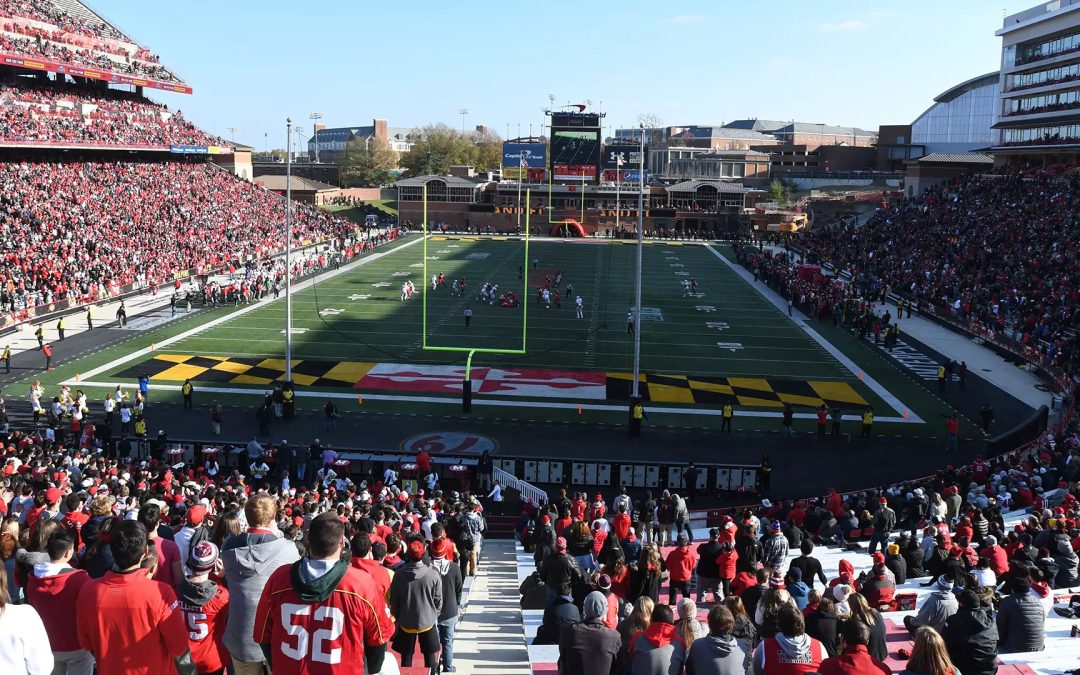
Maryland Football’s home attendance percentage is 78.5% over the past three seasons. This mark is 8th-worst among all Power Four programs.

Maryland football has a stadium atmosphere problem as much as a product problem, and the two are self-reinforcing.
A quiet, half-empty stadium makes the experience worse, which suppresses future attendance, which makes recruiting harder, and so on.

Maryland has talent on their roster, but expectations will be minimal for the Terps season. They’ll be picked to finish near the bottom of the Big Ten by most prognosticators.

As is, there will be little to no fan interest for the Hampton game.

Virginia Tech will have a decent crowd, with many local Hokies fans attending.

That will also be true for the Penn State game.

The UCLA, Rutgers, Illinois, and Wisconsin games figure to have middling attendance.

Stadium capacity is 51,802. Crowds of approximately 35,000 for those games seem likely.

Maybe a bump for the Rutgers game, as that will be Maryland’s Homecoming game.

Over 200,000 alumni reside in Maryland alone, with tens of thousands more in nearby D.C. and Northern Virginia, putting a vast majority within a 90-mile radius.

Given the above, my goals and thoughts* if I were Maryland’s Athletic Department would be:

*Numbers are my thoughts, bullets are Claude’s expanded ideas.

1) Fill the Stadium by any means necessary, and improve the tailgating experience. Consider giving out free tickets to First Responders, the Business Community at-large (particularly those companies led by MD alumni), local Alumni within 90 minutes, and the premier HS Football Programs in the DC, and Baltimore areas.

I’d recommend a tiered approach:

  • Complimentary: First responders, active military, youth football programs (entire teams + families), Large school groups.
  • Deeply discounted ($5–10): HS students within 60 miles, community college students, Boys & Girls Club groups.
  • Alumni incentive pricing: 2-for-1 for first-time season ticket holders from local zip codes.

The key is making these feel like invitations, not charity. “Maryland Athletics invites you” lands very differently than a discount code buried in an email.

2) Regarding tailgating, I’d be looking to have Brewery, Distilling, BBQ, and Seafood tastings of the best local companies in those industries for each game. Invite the breweries, distillers, etc… and give them free space to set-up and showcase.

  • Curate it — don’t just invite anyone. Feature 4–6 genuinely excellent local businesses per game.
  • Rotate vendors by game so there’s a reason for repeat attendees to come back.
  • Free entry to the Tailgate Village, revenue comes from vendor sales. Vendors get marketing exposure, MD gets an improved atmosphere.
  • Give it a name and brand it — “The Terrapin Tailgate” or something that becomes a destination unto itself.
  • This also creates tremendous social media content — local breweries will promote it to their own audiences.

3) The goal is to build the best atmosphere as possible for the games. Build up interest in the program and gameday experience. Later hope to leverage that with increasing demand (if/when the on-field product improves). It’s a better experience for all if the stadium is full, and people are buying concessions, etc… vs. a stadium not-close to capacity. MD should create some type of plan which incentives existing Maryland students to attend, and stay during the duration of the games.

Re: Getting students to stay, some ideas:

  • Gamified attendance app — scan in at kickoff, halftime, and end of game. Accumulate points redeemable for merch, food credits, priority access to away game tickets or bowl trip packages.
  • “Fourth Quarter Club” — students who stay for the full game get entered into weekly drawings (signed gear, meet the coach, field access post-game).
  • Improve the student section experience directly — student-only food options, a designated student DJ or hype section, peer-led traditions. Students leave when they’re bored or cold, not just when the team is losing.
  • Work with Greek life and student orgs to make gameday socially mandatory for certain crowds.

Re: Corporate & Alumni Outreach:

  • Again, 200,000 local alumni is the most underutilized asset.
  • “Maryland Business Tailgate” for one game — target C-suite and mid-level executives who are alumni. Make it a networking event with football attached. Many will buy season tickets the following year if they have a great experience once.
  • Partner with the University’s alumni association to do direct outreach, not just email blasts — phone calls and personalized letters to alumni within 60 miles who haven’t attended in 3+ years.
  • Offer small business spotlight opportunities in the tailgate village to MD-alumni-owned companies specifically. They get marketing, the program gets buy-in.

Game-by-Game Thoughts

Hampton (9/5) — This is the ideal game to flood with free/discounted paper: first responders, high school programs, student groups, youth football leagues. Make it a community appreciation night. The goal isn’t revenue — it’s a packed house for the season opener and good optics heading into the schedule.

Virginia Tech (9/19) — Local Hokies fans will show, but this is actually a recruiting showcase opportunity. Invite every top recruit in the DMV pipeline. A loud, engaged crowd against a recognizable opponent is exactly the setting you want prospects experiencing. Price this one competitively but don’t paper it — the natural draw is there.

UCLA (9/26) — Underrated opportunity. There’s a significant California transplant and UCLA alumni population in the DC/NoVA corridor. Reach out to the UCLA alumni chapter directly. Give them a dedicated section. This turns a middling game into something with a fun, collegiate atmosphere on both sides.

Rutgers (10/17, Homecoming) — Lean hard into this one. Homecoming should be the most aggressively marketed game of the year to local alumni. Every alumni chapter within 90 miles gets a personal outreach campaign. Corporate hospitality packages. This is the best shot at a legitimately full stadium with an engaged crowd.

Illinois (10/31) — Halloween — Falling on Halloween is a gift. Costume contest, themed concessions, kids-free sections, etc.

Wisconsin (11/14) — November football in College Park has been a tough sell. This is where the tailgate experience really needs to carry the weight. A great indoor/covered tailgate area with local food and drink vendors becomes critical when it’s 38 degrees.

Penn State (11/28) —  The Nittany Lions will travel well. Make sure Maryland fans can actually get tickets and aren’t priced out by the secondary market. Consider loyalty-based ticketing priority for this one to reward the actual fanbase.

Obviously all of this works better if the team is competitive.

You can manufacture atmosphere but you can’t fully manufacture passion for a 3-9 team.

The goal right now should be lowering the activation energy for casual fans to show up and have a great time, so that when the program does take a step forward, there’s already an audience conditioned to attend. The idea here is an infrastructure investment for a future payoff.

Outside of an improved product between the lines, what recommendations would you make for MD to have an improved game day experience?

Chris Stoner
Chris Stoner

Owner

Chris Stoner founded Baltimore Sports and Life in 2009. He has appeared as a radio guest with 1090 WBAL, 105.7 The Fan, CBS 1300, Q1370, WOYK 1350, WKAV 1400, and WNST 1570. He has also been interviewed by The Baltimore Sun, Baltimore Business Journal, and PressBox (TV). As Owner, his responsibilities include serving as the Managing Editor, Publicist, & Sales Director.

X