

…and the Ravens need to build the 2017 offense around him.
Breshad Perriman has been quite the anomaly. The 2015 first round draft pick of the Ravens is essentially playing in his rookie year after missing all but the first hour of training camp a year ago with “the slowest healing knee ligaments ever seen”.
Since debuting this year and remaining healthy, the wideout with lightning quick speed has been on both ends of the extremes. Perriman’s first catch in his young career, as well as a handful of others have been highlight reel material. In traffic, contorting his body to make the grab, showing leaping ability. On the other end, many of his targets have resulted in easy drops. Short passes, wide open, right off the hands. Or in situations where a ball is poorly thrown and the receiver has to turn into defender, Perriman lacks that bit of instinct.
Discuss your thoughts on this topic on our message board.
“Concentration drops” scouts called them when Perriman was evaluated for the 2015 draft. Could they be fixed, or coached? Concentration drops are drops none the less. It leaves me to wonder if Joe Flacco and the coaching staff trust Perriman as he has remained relatively quiet on the year. It was alarming to see that he played just 23 snaps in the Dallas game two weeks back and was never once targeted.
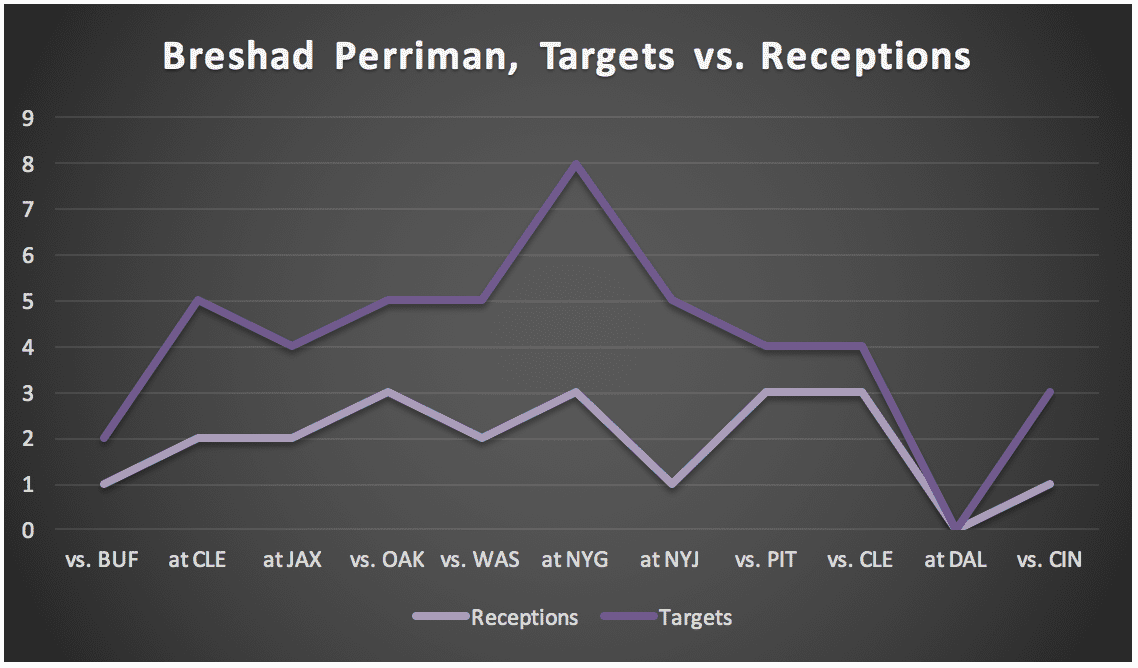
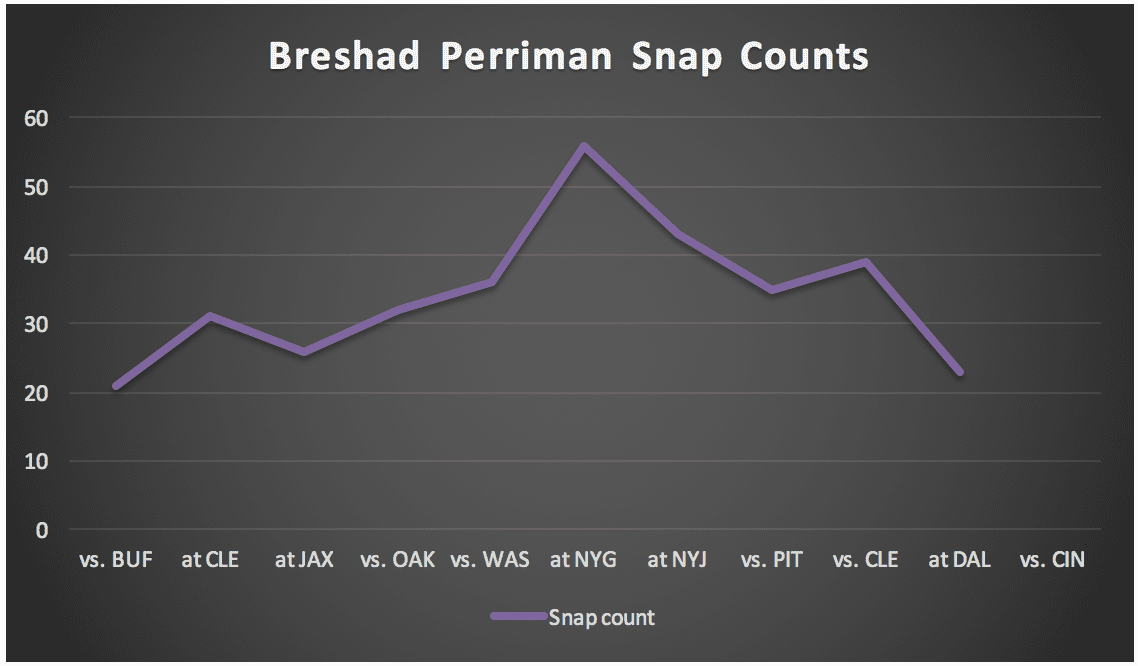 The charts above would suggest that the Ravens brought Perriman into the fold slowly, increasing his workload little by little. When they went on the New York road trip visiting the Giants and Jets in consecutive weeks, it was without Steve Smith as he nursed an ankle injury. You see the spike in Perriman’s snaps and targets the first week without Smith, but not the spike in receptions. His playing time then began to dwindle to the point where he didn’t even get a target in the game against Dallas
On the plus side, Perriman has found the endzone in remarkable fashion for the Ravens in two of the last three games. Highlight reel grabs against the Browns and Bengals. That has to earn him some more looks as the season reaches the home stretch. But what is it in between the 20s that keeps Perriman from being a contributor more often during games?
The easy answer is he’s fourth on the depth chart behind Smith, Mike Wallace, and Kamar Aiken. When Baltimore goes spread in the offense, it’s always with a tight end, a running back, sometimes Kyle Juszczyk lined up in a receiver’s spot. I can’t recall them ever using strictly four wide receivers. When Perriman gets his chances, more often than not they come near the end of drives when someone is catching a breather.
Should we expect more from Perriman by now? Some guys come right into the league and make a splash. Some guys are complete busts. Let’s revisit the 2015 draft.
Four wideouts were taken ahead of Perriman in 2015. Amari Cooper went fourth overall and is the total package. Would be unfair to compare the 26th pick in the draft to the fourth, and Pro Bowler in Cooper. Taken seventh was Kevin White and injuries have kept his career from taking off. He played four games in 2016 before going to IR again. DeVante Parker was taken 14th in 2015. While the Dolphins offense isn’t one that lights up the scoreboard, Parker has been a key player for Miami the last two seasons. Nelson Agholor went number 20 overall, six spots ahead of Breshad Perriman, and the Eagles are on the verge of benching him. He’s got more problems between the ears that are hindering his development on the field.
So it could be better, it could be worse when you look at who was taken ahead of Perriman. But then you look past Perriman. Three picks later the Colts took Phillip Dorsett. He’s a victim of the depth chart for now, but giving about the same output as Perriman. In the second round, teams selected Devin Smith, Dorial Green-Beckham, and Devin Funchess. Smith didn’t make any impact as a rookie and went to the PUP list, maybe activated in the near future for his first action of 2016. Green-Beckham has been traded from Tennessee to Philadelphia already because of maturity issues. He has the physique at 6’5” 225 lbs. He’s a solid contributor over two seasons but not anything to write home about. The same goes for Funchess. Big guy, solid contributor, not a difference maker. Green-Beckham and Funchess are starter caliber players though.
We could cherry pick some later picks like Tyler Lockett, Jamison Crowder, Stefon Diggs and ask why isn’t Perriman developing like them. But that isn’t fair. Then you have to name the other 16 or so others taken later that never made a name for themselves.
Let us look at the 2016 draft now. The first round picks went Corey Coleman, Will Fuller, Josh Doctson, and Laquon Treadwell. Coleman had a breakout performance at the Ravens expense but a hand injury sidelined him through the middle of the season. He’s been back for a few weeks, and plays on the Browns, so you be the judge. Will Fuller is another one who started with a bang, notching 100 yard performances in his first two games, but then defenses caught on and he’s been nearly absent at times for most of the year. Josh Doctson was placed on IR after two weeks and two catches. Laquon Treadwell has one catch on the year and has been battling a lingering foot injury. In Stefon Diggs recent absence, Treadwell hasn’t been able to gain playing time.
Look at the second round though. Sterling Shepard, Michael Thomas, and Tyler Boyd. All three have out performed this years first round picks. All three are out performing Breshad Perriman. Shepard, Thomas, and Boyd all see plenty of targets as rookies and Boyd will be leaned on even more with A.J. Green missing time with a hamstring injury.
Does this mean that Breshad Perriman is behind the curve? Not necessarily. Everyone needs to be judged by their individual situation. Michael Thomas is in a pass happy offense where he walked in near the top of the depth chart. Sterling Shepard benefits by having Odell Beckham drawing attention opposite him.
We can spend all day breaking down everyone’s unique situation, but the only one that we need to worry about, and the Ravens really need to worry about, is Breshad Perriman’s situation. He’s not going to put up the type of numbers expected from a first round pick if he doesn’t get the playing time. Plain and simple. He won’t get the playing time being number four on the depth chart. Asking Perriman to supplant Smith and Wallace is too tall a task to ask for. He can rise up the depth chart for 2017 though given some circumstances. Steve Smith could walk away from the game. Kamar Aiken isn’t a lock to be retained as he becomes an unrestricted free agent at the end of the season. The Ravens can choose not to exercise the $8M option on Mike Wallace.
It’s not likely, but it is possible that Breshad Perriman starts 2017 as the number one receiver on the depth chart. Probably number two though as I would personally offer Mike Wallace the option and maybe an extension to lower the cap hit. We have begun to see how dangerous he can be when utilized properly, using his speed in open spaces.
It appears it is too early to judge Perriman just 11 games into his career with a depth chart log jam ahead of him. But the need to rely on him will likely be coming up next year. This is something the Ravens should keep in mind as they begin to look for the next offensive coordinator at seasons end. Do they want to continue down the path of the West Coast offense? Will they keep Marty Mornhinweg as the play caller next year? Will they go back to an Air Coryell system like the Cam Cameron days? Will they do something different all together?
Whatever they decide to do, they need to keep Breshad Perriman in mind. He’s under contract through 2018, maybe 2019 if they exercise the fifth year option to their first round pick. Critics like to point out that the Ravens don’t have any “playmakers”. Perriman is the guy you can mold into a playmaker. If you go back to those “concentration drops”, maybe the west coast offense isn’t built for Perriman. Timing, precise route running, short passes as an extension of running the football are staples of the system. Catching two and three yard bullet passes can be tricky. Maybe it’s alligator arms, hearing footsteps when coming across the middle, lacking strength in the wiry frame to secure the ball from an impending hit.
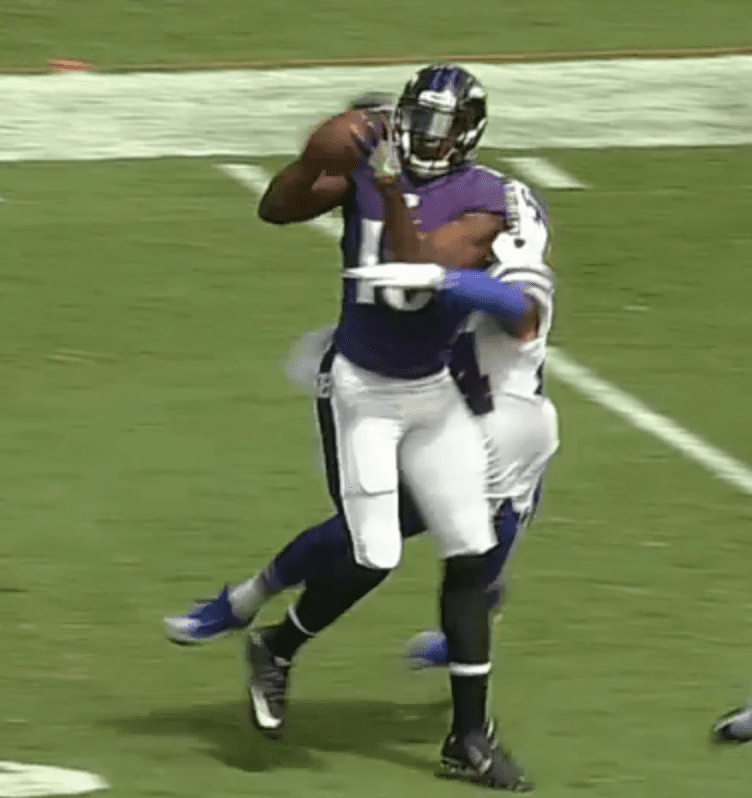
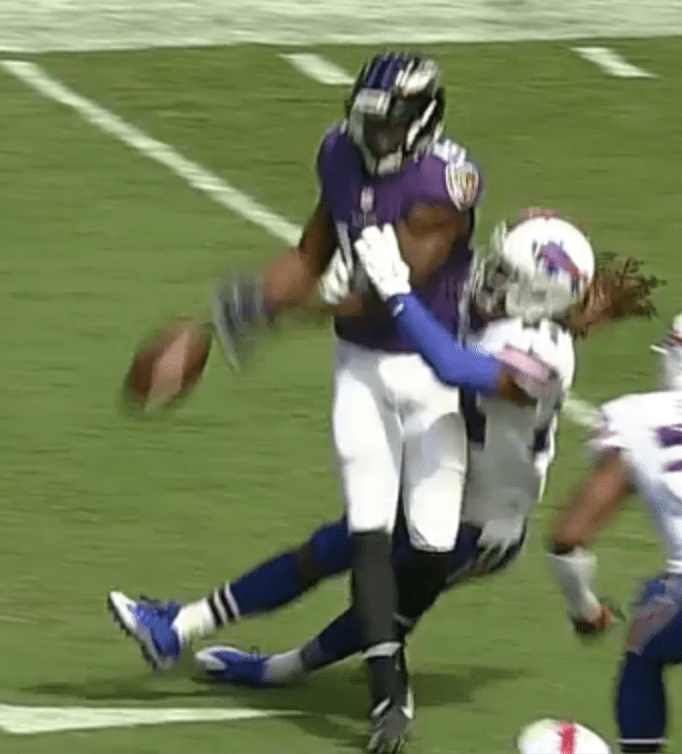
On the other hand, put the ball up in the air and let him use his speed, agility, leaping ability to go get it.
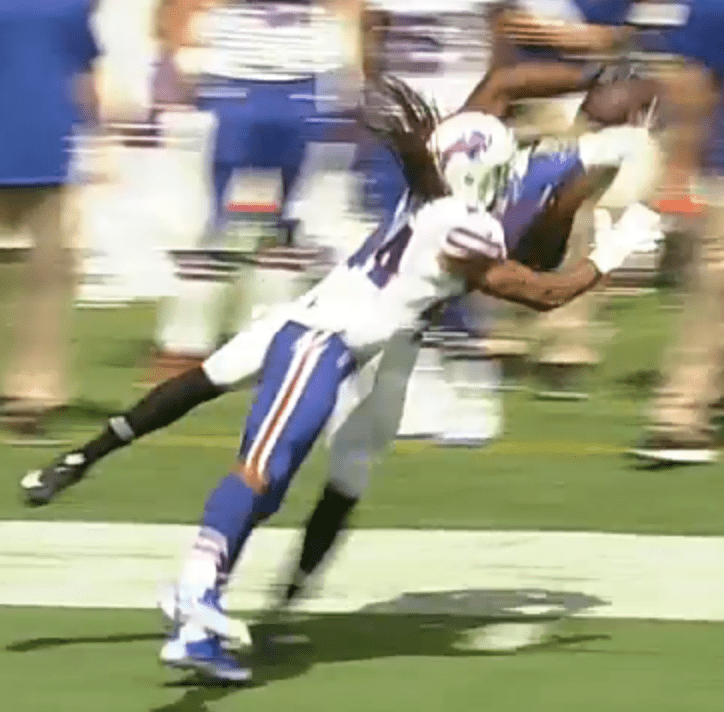
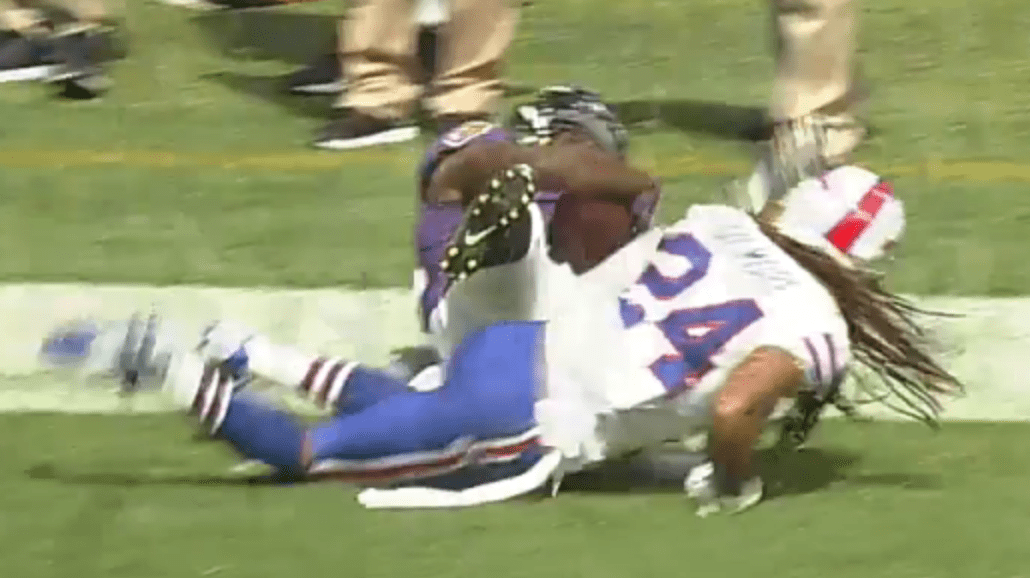
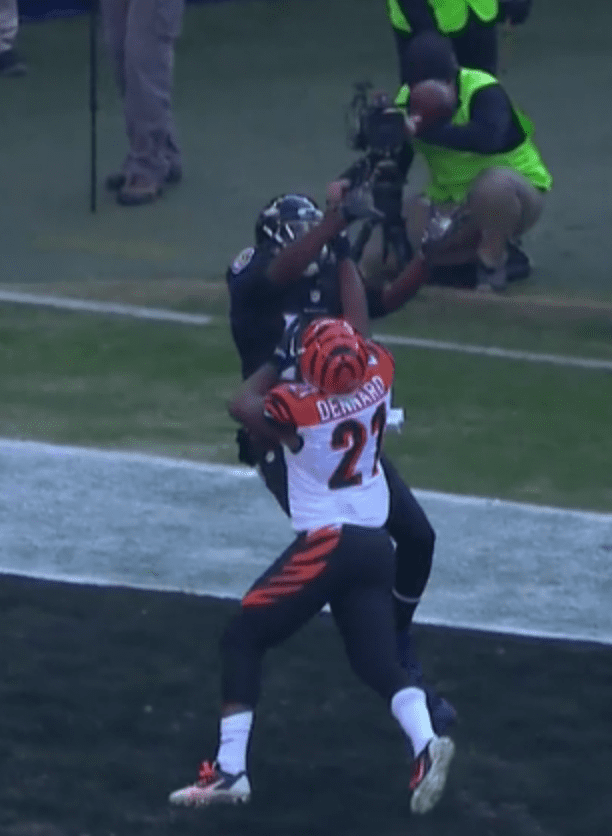
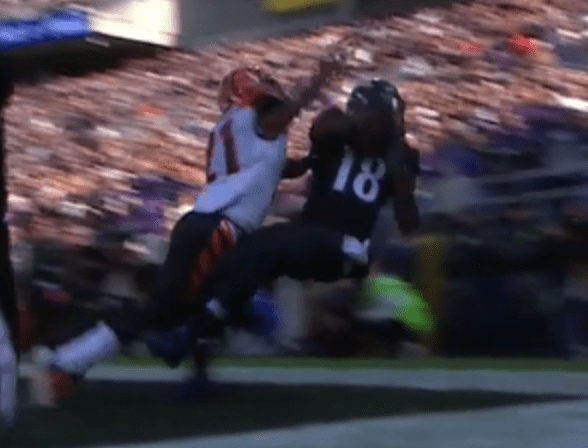
There are a lot of similarities in Breshad Perriman and former Ravens receiver Torrey Smith. But Perriman has more playmaking ability from what I’ve seen in his young career. Torrey had his moments, speed for sure, but didn’t track the deep ball well and wasn’t likely to win on contested catches. Perriman we have seen win these tough jump balls, and track the ball with fluidity.
Torrey had his best years here when the Ravens ran Cameron’s Coryell system. The Coryell system utilized his skills the best. Straight line speed. It’s not too surprising that his numbers suffered in a bad way when Gary Kubiak brought the West Coast System here, and Chip Kelly’s version of it in San Francisco has suited him no better as Torrey is regarded as one of the lowest graded receivers in the NFL right now. The 49ers tried shopping him at the trade deadline, but no takers for that large contract Smith hasn’t lived up to.
Route running was never a Torrey Smith strong suit and it doesn’t look like a Breshad Perriman one either. Maybe like Torrey, the West Coast system isn’t the best use of Breshad Perriman’s skills. If you are as unimpressed with Marty Mornhinwegs version of offense as I am, this is further proof that the Ravens should be looking to take the offense in a different direction come 2017. A play caller who will design more plays to get Perriman looks on deep balls, rather than the short ones he struggles with.
Don’t let a first round skill position player become a bust because he doesn’t fit the scheme you want to run. Design the scheme to fit the players you want to use the most. A guy with blazing speed and playmaking ability under team control for up to three more seasons is a guy you want to lean heavily on.

Ravens Analyst
Mike was born on the Eastern Shore, raised in Finksburg, and currently resides in Parkville. In 2009, Mike graduated from the Broadcasting Institute of Maryland. Mike became a Baltimore City Fire Fighter in late 2010. Mike has appeared as a guest on Q1370, and FOX45. Now a Sr. Ravens Analyst for BSL, he can be reached at mike.randall@baltimoresportsandlife.com.