
Prior to his season, in nine editions of the College Football Playoff only once did it seem there were not enough spots available for deserving teams. That was in the very first edition following the 2014 season, when we had three 1-loss conference champions in Ohio State, Baylor and TCU fighting for the fourth and final spot. Baylor and TCU, who finished with identical records back when the conference did not play a championship game, were crowned co-champions by the Big 12 in the hopes that it would boost the chances of one getting in. It had the opposite effect. Ohio State, who had seemingly been written off as a contender, especially after having to resort to their 3rd-string quarterback (make a note of that for later), ended up blasting Wisconsin 59-0 in the Big Ten title game and gave the selection committee an alternative to the Baylor-TCU conundrum. The Buckeyes would of course go on to answer any doubts they belonged by dispatching of #1 Alabama and #2 Oregon on their way to the title.
From 2015-2022 there was little controversy about the field. If anything, it sometimes felt like there were not enough worthy teams to fill a 4-team bracket, resulting in boring semifinal blowouts. This created a controversy of its own – while college football has never had a perfect postseason, did we only make it worse? As the importance of making the 4-team playoff became the focus of the entire season, it seemed to equally diminish the rest of college football’s unique postseason. No longer was a matchup of Top 10 teams in historic games like the Rose Bowl, Orange Bowl and Sugar Bowl worthwhile if it wasn’t part of the playoff. In a bygone era, these games were appointment viewing on New Year’s Day for even casual college football fans, whether or not they had any bearing on who would be crowned national champion. Now….many players don’t even bother to play in them.
The 2023 season ended up being unique. For the first time in the CFP era we had three Power 5 conference champions that were undefeated. Neither of them were the SEC Champion, who many deem would sacrilegious to leave out of the playoff, and the other defeated the SEC Champion on the road by 10 points. By now you all know how that worked out. Florida State, by virtue of having an injured starting quarterback, gave the selection committee the excuse they needed to leave them out, rather than having to make the uncomfortable choice of leaving Alabama out (ESPN would not be pleased) or the Texas team that handed the Tide their only loss. I don’t feel like we ever got true transparency from the committee on their discussions and processes throughout the rankings season. Florida State lost starting QB Jordan Travis two weeks before the ACC Championship Game, yet Florida State remained ranked ahead of both Texas and Alabama in the next rankings. Then they lost their backup, Tate Rodemaker, during in the regular season finale against Florida, and still remained ahead of Texas/Alabama. It wasn’t until they had to resort to their third string QB against Louisville that apparently enough was enough….despite the fact that Rodemaker will be able to play come bowl season. I think the committee was truly just sitting there hoping Florida State would lose and make their life easier. The Seminoles did them no such favors.
So yeah, we really could have used that 12-team playoff this season. And you know, we may have actually been able to have it, but back in the summer of 2021 when the plan was first floated, three conference commissioners voted it down….the ACC, Big Ten and Pac-12 commissioners (a.k.a. The Alliance). Their reasons were somewhat vague, but I think we can safely say the SEC poaching Texas and Oklahoma from the Big 12 just a month earlier had something to do with that. They were circling the wagons. Had they voted yes, it was likely, though not a certainty, we could have had the 12-team playoff in time for the 2023 season. But they dithered for 16 months and we’ll have to wait until next year. How ironic that the ACC was one of the “no” votes back in 2021, and now it’s their undefeated champion that has suffered the consequence. Anyway, I know it’s wishful thinking, but this is what the field could have looked like.
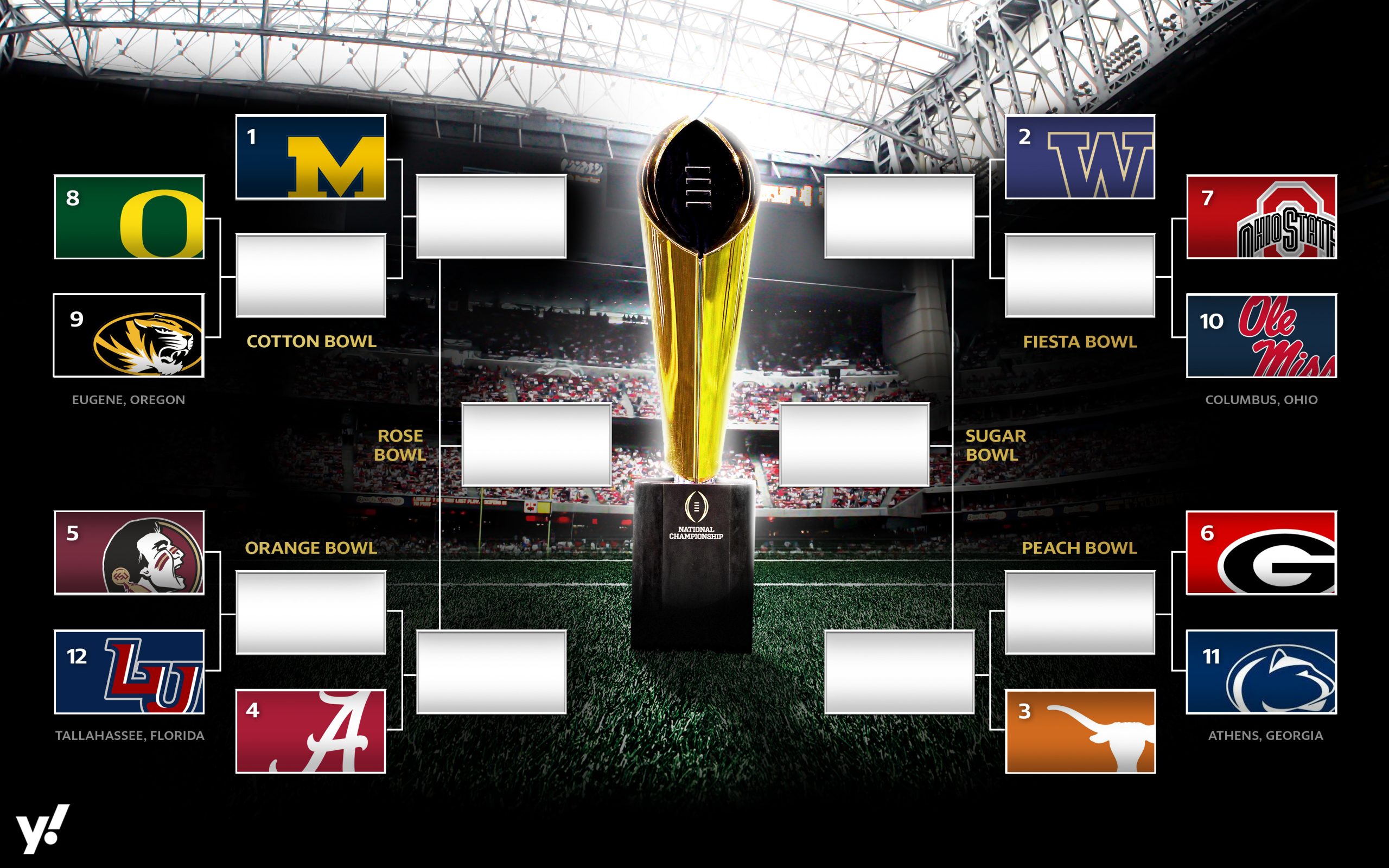
Not bad, eh? Maybe not perfect for some. There would still be a debate. Florida State is still ranked 5th, and therefore does not get a 1st Round bye. But they still have a shot, they do get a 1st Round game on their campus, and it would be against the G5 representative, Liberty. That’s pretty manageable, and maybe even an advantage as they wouldn’t be as rusty come January (and Rodemaker could probably use the extra snaps). Missouri at Oregon and Ole Miss at Ohio State look like intriguing 1st Round matchups. And all of the 2nd Round games look fun. Georgia vs Texas in the Peach Bowl? Yes, please.
So thinking ahead, will we ever see the kind of passionate debates we just had with the Seminole Snub, or like some of the ones we used to have back when a champion was crowned by sportswriters (and different polls sometimes split champions)? I doubt we will have any sort of future debate that is as consequential as this one. It’s hard to imagine with a 12-team field that a team truly worthy of a chance will be completely left out. At worst, certain teams may just face a more challenging path than what they deserved. So while it might not evoke the same sort of response, here’s where I think we could see some controversy going forward. First, I’ll go over the exact format. I am going to make an assumption that there will be a modification from what we are currently supposed to have. We’re supposed to get the Top 6 conference champions plus the next 6 highest ranked teams as at-large entrants. With the gutting of the Pac-12 conference after this season, and thus the Power 5 becomes the Power 4, I fully expect that will be modified to the Top 5 conference champions and the next 7 highest ranked teams.
Beginning after Week 10:
-
- The selection committee will still rank its Top 25 weekly
After conference championship weekend:
-
- 12 teams make the field
- The 4 highest ranked conference champions will be seeds 1-4, in ranked order
- Seeds 1-4 will receive 1st Round byes
- Seeds 5-12 will fill in the rest of the bracket in order of ranking
- At least 1 of those teams will be the next-highest ranked conference champion (likely the highest ranked G5 Champ)
- Seeds 5-8 will host seeds 9-12 on (or near) their campus in the 1st Round
- The winners advance to the quarterfinals which will comprise 4 of the 6 current CFP bowls
- Quarterfinal winners advance to the semifinals, which will be the other 2 current CFP bowls
- The Championship Game will continue to be played at a site TBD by a bidding process
Obviously the 1st Round byes will be very coveted, and might add a little more meaning to those conference championship games. It also might open the door for a very odd-looking bracket if we get a big upset in one of those games. (Imagine if Iowa beat Michigan and got a Top 4 seed?). When it was the Power 5, we could have had some controversy over which Power 5 champ doesn’t get a bye (see several paragraphs above). But now that there will only be 4 power conferences going forward, that debate should be eliminated most years. So while the #5 seeded team could definitely be better than the #4 seeded team in a given year, 4 vs 5 is black-and-white criteria, so I don’t expect much controversy (unless it’s people complaining for a rule change).
How about the debate over #5 vs #6? The 5th seed probably hosts a G5 team most years in the 1st Round, while the 6th seed hosts #11. In our 2023 pretend model above, that’s the difference between playing Liberty or Penn State. Yeah, there could be some debate there.
Then there’s #8 vs #9. Those teams will go head-to-head in the 1st Round. Think the folks in Missouri might be asking whether or not they should have been ahead of Oregon instead of having to make a trek out to Eugene? Might be some debate there.
Of course there’s the matter of the First Team Out. This year that would’ve been #12 Oklahoma, who were stuck behind Penn State. While their records were both 10-2, the Sooners beat #3 Texas this season. Penn State’s best win came against #17 Iowa. Oklahoma might have a gripe.
And finally, the G5 are guaranteed at least one spot in the playoff. Getting that spot is obviously very big for both the team and the conference they play in, in terms of both money and prestige. This year it’s Liberty from Conference USA. They finished ranked 23rd, just one spot ahead of AAC champ SMU. Thing is, per ESPN’s FPI Liberty’s strength of schedule was at the very bottom of FBS, 133rd. Meanwhile SMU’s only two losses came on the road against Power 5 teams, #12 Oklahoma and TCU. The Mustangs also knocked off Tulane in the AAC Championship Game, who came in ranked 22nd. Seems like the committee did with Liberty/SMU the exact opposite of what they did with Florida State/Alabama.
So there you have it. Like I said, none of these feel nearly as consequential as the Florida State conundrum, and even put together I don’t think they will elicit that level of passion. But, time will tell. If nothing else, there’s some fun looking matchups we could’ve had this season, and hopefully will have in future seasons.
I’ll be writing a bit about the New Year’s Six bowls and CFP Semis next. In the meantime, enjoy the start of bowl season this Saturday. It’s a big lineup!
Myrtle Beach Bowl
Georgia Southern vs Ohio (11am ET, ESPN)
Cricket Celebration Bowl
Howard vs Florida A&M (Noon ET, ABC)
R+L Carriers New Orleans Bowl
Jacksonville State vs Louisiana (2:15pm ET, ESPN)
Avocados From Mexico Cure Bowl
Miami, OH vs Appalachian State (3:30pm ET, ABC)
Isleta New Mexico Bowl
New Mexico State vs Fresno State (5:45pm ET, ESPN)
Starco Brands LA Bowl Hosted by Gronk
UCLA vs Boise State (7:30pm ET, ABC)
Radiance Technologies Independence Bowl
Cal vs Texas Tech (9:15pm ET, ESPN)

College Football Analyst
Mike is a Baltimore native living in Portland, OR since 2007. He currently runs his own business specializing in video production and online marketing. Prior to that he was a legal technology consultant, worked for 9 years at Johns Hopkins University and served 6 years in the Air Force. He also enjoys travel, food, beer, and is a volunteer at the Oregon Humane Society.