
A few interesting storylines as we turn the calendar and head into Week 6
Army and Navy are both 4-0. The last time this happened was just months after the end of World War II in 1945. And they aren’t simply winning….both have an average margin of victory of over 20 ppg.
Now imagine this: With Army joining the AAC as a football-only member this season there is a chance the two could meet for the AAC Championship on Dec 7, one week before they meet again in their regularly-scheduled game (which both academies and the AAC agreed would always count as a non-conference game). It’s not out of the realm of possibility the winner of the first matchup could get into the CFP as the highest-ranked Group of Five champion, then lose in the rematch the next week after the field has been set in stone.
Check out this list of teams that are also currently undefeated: Duke, Indiana, Iowa State, Rutgers and UNLV. The last time all of them were still undefeated heading into October? Um….no idea, but I’m going to guess never and feel pretty good about it.
Other surprises
Colorado – After looking like the same team from last season while struggling in the trenches in a tight Week 1 win against North Dakota State, then looking completely inept offensively at Nebraska, Coach Prime’s bunch may have turned a corner. The revamped offensive line has spurred a respectable running game and kept QB Shedeur Sanders a little bit cleaner as the Buffaloes have reeled off three straight wins and are unbeaten in Big 12 play. Still, we must temper that by noting the competition they faced wasn’t exactly stellar (Colorado State, Baylor and UCF). After a bye this week, they host #20 Kansas State, where I suspect we will learn much more about whether they are a contender or pretender.
Texas Tech – After needing overtime to avoid a huge Week 1 upset against FCS Abilene Christian, then getting rolled at Washington State, the Red Raiders rebounded to knock off then-undefeated Arizona State and Cincinnati to also start Big 12 play undefeated. Like Colorado, their next test will be tougher: at Arizona.
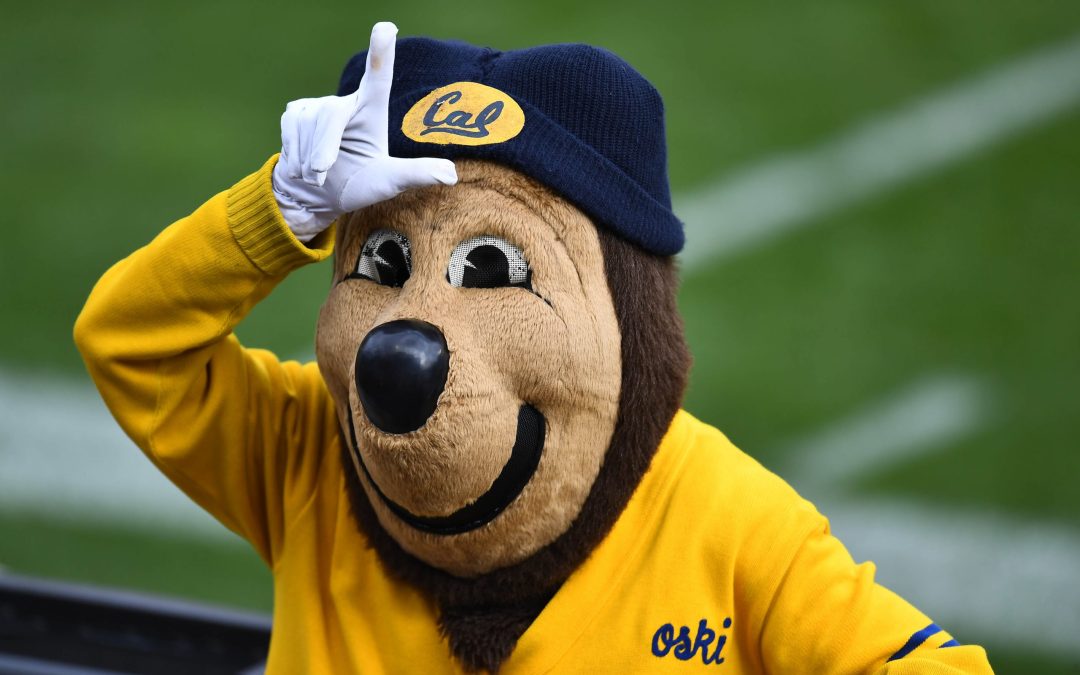
Rewind in your mind to about 15 months ago. At that time could you have imagined that Cal would host Miami, in an ACC conference game, and that this would be a big enough matchup that ESPN’s College GameDay crew would show up in Berkeley? If your answer is anything other than hell no, you are lying. GameDay’s guest picker will be Cal alum and East Bay native Marshawn Lynch. Here’s guessing that Lynch, Pat McAfee and Nick Saban on set together will be….interesting.
Now the bad news
Back in April an idea for the future of college football was leaked to the media. An advisory group called College Sports Tomorrow (CST) was floating plans for a “super league” that would include the top 70-ish FBS teams, divided into geographic divisions, that would compete in an NFL-like format to crown a champion. To make it inclusive of all FBS, promotion and relegation for the top tier of the league would be possible. This week, CST officially released its plans for what they would call the College Student Football League (CSFL), and it looks….great to me! 72 teams would be divided into 12 divisions to be the Power 12 conference (see below), while the rest of FBS would be split into 8 divisions of 8 teams known as – wait for it – the Group of 8. Again, the top Group of 8 teams could earn promotion into the Power 12, with the bottom Power 12 teams being relegated, much like European soccer.


As with most great ideas for how college football could be improved, this will never happen. Those who hold the most leverage in the sport, the Big Ten and SEC, have no incentive to go along with this (more on that in a moment). Simply put, this would require a level of agreement and cohesiveness between the 10 FBS conferences, and 136 schools total, that has never before existed and probably never will. Still, 10 years from now when we see what college football looks like, and we look back at this idea, I firmly believe we’ll be wishing it could’ve happened. Book it. Which brings me to….
Next week in Nashville, an advisory group of presidents and athletic directors from the Big Ten and SEC will meet to discuss “issues” of common interest to both behemoth conferences. Specifically, they are expected to discuss a scheduling alliance (sounds nice), the future of revenue sharing via the House v NCAA settlement (hmmm), and the future of the College Football Playoff (uh oh). If that latter part sounds like the precursor to a hostile takeover of college football’s keystone event, well then….you’re right to be concerned.
After the 2025 season the only thing we know about the playoff is that ESPN will own the full broadcast rights, and how the conferences will divide the money ESPN pays them – and if you recall, the Big Ten and SEC will get the lion’s share of that money (29% each). For comparison, the ACC will receive 17%, the Big 12 15%, and the entire Group of Five divides the remaining 9% (how the rebuilt Pac-12, which also begins play in 2026, will figure into the equation remains an open question). But the format of the CFP beginning in 2026 is still to be determined.
When the CFP committee announced the revenue distribution agreement, an underreported aspect was that the Big Ten and SEC would have most, though not total authority in determining what the future format would be. We heard leaks that the two wanted at least 3, and maybe as many as 4 guaranteed spots for the top teams from each of their conferences. So that means as many as 8 spots for the Big Ten/SEC would always be locked in, no matter the outcome of the regular season and conference title games. To assuage the ACC and Big 12, who still have a voice in the room (though certainly not an equal one) the two kings of the castle seem willing to grant an additional automatic bid to a second team for each. That means as many as 12 spots will be locked in for the P4 conferences each season before a single game is played. If you are wondering what’s left for the Group of Five (or Six, depending on how you view Pac-12 2.0), well, it’s almost certainly not much. Under this scenario, the field would expand to at least 14 teams, so theoretically the G5 could still be promised at least 1 spot for its top conference champion. Still, when you look at the scenarios, it’s pretty clear who is intending to take over.
If you are wondering why the Big Ten and SEC would want so many guaranteed spots, when their teams would typically get them anyway in a format that chooses at-large teams based on CFP rankings, here’s why – they don’t trust the rankings committee. The two conferences, with their recent expansions, are concerned that the committee would look at one of their teams who went 9-3 but played a very difficult schedule, and rank them below an ACC or Big 12 team that went 11-1 or 12-1 but played a much lighter schedule. If you want to paint a picture in hypotheticals, look at Georgia right now. They just lost a 1-score game at current #1 Alabama. Coming up they have a road game at #2 Texas and face #4 Tennessee at home. A 9-3 season for the Dawgs is plausible, but if those three losses to Top 5 teams are all by 1-score, are we going to say that the Bulldogs are not as good as, say for example, a BYU team that goes 12-0 then loses in the Big 12 Championship game? If history is any guide the committee will always rank a 1-loss power conference team ahead of a 3-loss power conference team, no matter their schedules.
So now you see the Big Ten and SEC’s concern, and it’s a fair point. My counter to that would be that no one forced them to add the likes of Texas, Oregon, Oklahoma, USC, etc to their ranks and make the road for their existing teams even tougher. They did it for money, and if that means they get one less team in the CFP, then go console yourselves while cashing that check. Ok, I’m done.
Picks….
Kind of light on marquee matchups this week, but here’s some games that stand out to me.
Missouri at Texas A&M – Noon ET, ABC, (Missouri +2.5) – The Tigers did not look impressive in recent home wins against Boston College and Vanderbilt. Both opponents might be better than expected, but still, if you are a true Top 10 team, you shouldn’t struggle against them at home. But Mizzou is coming off a bye while the Aggies played Arkansas in Arlington last weekend, winning by 4. I’ll go with the better-rested Tigers.
Michigan at Washington – 7:30pm ET, NBC, (Washington -1.5) – The Huskies lost a heartbreaker in Piscataway last Friday in which their beleaguered placekicker missed three FG attempts, including a game-ender that would have sent it to overtime. The Wolverines on the other hand are still working on that whole forward pass thingy. I’ll take U-Dub to bounce back at home.
Miami at Cal – 10:30pm ET, ESPN, (Cal +10.5) – Whoo boy, my Upset AND Lock of the Week. Set aside that the Hurricanes already have to travel 3,000 miles to play this game in the middle of the night (where they’re coming from). As the head coach at Oregon, Mario Cristobal went 3-1 against Cal, but was only 1-3 against the spread. Cristobal’s offense often looked flummoxed going against Justin Wilcox. Want more? Last season Cal won against the spread and outright against Canes QB Cam Ward when he was at Wazzou. I think you can figure out who I like here.

College Football Analyst
Mike is a Baltimore native living in Portland, OR since 2007. He currently runs his own business specializing in video production and online marketing. Prior to that he was a legal technology consultant, worked for 9 years at Johns Hopkins University and served 6 years in the Air Force. He also enjoys travel, food, beer, and is a volunteer at the Oregon Humane Society.