
About a month ago I wrote about the hiring of new Baltimore Orioles general manager Mike Elias, coming up with a list of questions he would have to answer – and was probably already tackling.
Most of the questions were about how he was going to structure the front office and where he was going to place emphasis moving forward. Some of those questions have already been answered, with one particularly promising sign in the hiring of Sig Mejdal as assistant general manager of analytics.
But one question lagged: What style of manager would he be looking to hire?
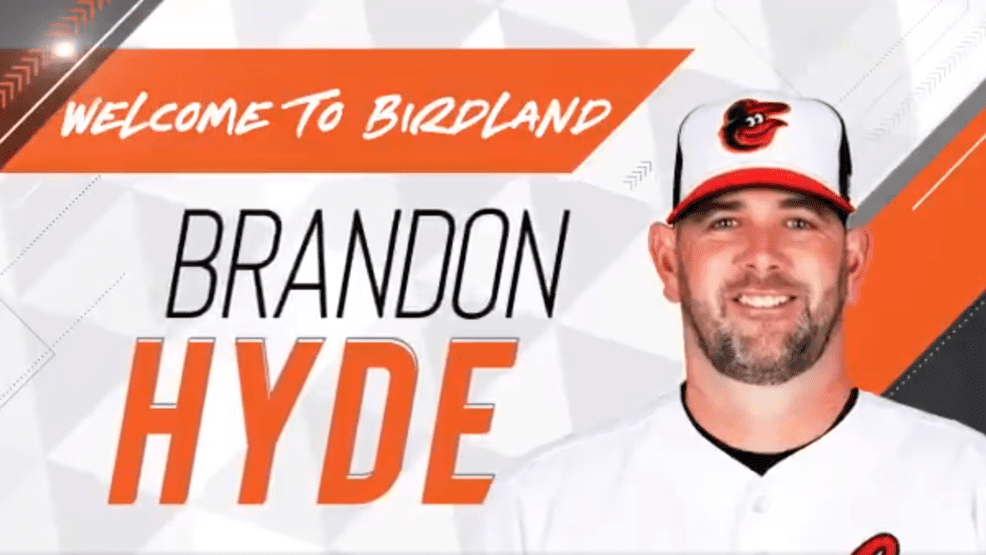
That question was finally answered Friday with the hiring of 45-year-old Brandon Hyde.
The basics of Hyde’s career can be found all over the internet, so we’ll just sum it up here. Hyde was a four-year minor leaguer in the Chicago White Sox system who played only 16 games above the Single-A level. He has managing experience in the Marlins system, and was successful, too, leading Double-A Jacksonville to the Southern League championship in 2009.
Hyde has also been an MLB coach for the Marlins and Cubs, where he has been since 2013. He rose as high as bench coach with both teams, serving in that role on two different occasions with the Cubs, first for Rick Renteria and later for Joe Maddon.
Perhaps more interesting than that are the roles Hyde held in the Cubs front office from 2011-13, when he served first as minor league field coordinator and then as the Cubs’ director of player development. When you go back and look at who the Cubs had in their pipeline around this era, you run into names like Javier Baez, Albert Almora, Jorge Soler, Arodys Vizcaino, Arismendy Alcantara and a fellow by the name of Kris Bryant.
It’s difficult to quantify the impact Hyde had on the development of such talented players, especially since he was in the role so briefly before the Cubs put him on Renteria’s staff. It’s not like he drafted or signed those guys. But some of those guys did take big steps forward in 2013, including Baez, who reached Double-A for the first time and put up a .983 OPS. The next season he played 52 games in the big leagues.
So while it might be a stretch to say Hyde deserves credit for sending those guys to the majors, it’s at least better than looking back and seeing nothing but a few tumbleweeds rumbling in the wind toward baseball irrelevance.
As far as the Cubs’ decision to move Hyde onto the major league coaching staff, it sounds less about any unhappiness over his player development skills and more about his potential to be a future manager.
As Theo Epstein said of Hyde in 2013: “I think it takes a special personality – as well as experience and having the technical knowledge – to be able to actually reach the modern player. To dig deep, engage and relate to them. Not relate to a player in a perfunctory level but really get in deep, find out what makes them tick and impact them on and off the field in a positive way. That’s what we were looking for.”
The sentiments are practically being echoed now, as Reid Cornelius, who was Hyde’s pitching coach on that 2009 Jacksonville team, told the Baltimore Sun: “I just remember thinking that Brandon is doing a super job and he’s going to be a big league manager. The way he prepares, the way he sees the game, he seems to be two steps ahead of the next guy across the way in the other dugout, and he had a good way of communication with his players, too. He was easy to play for. He asked for effort, but he ran a ballgame very well from the dugout.”
All of these things seem to add up to a wonderful candidate to manage any club, and might explain why he was linked to several teams this offseason, having interviewed with the Angels, Rangers and Blue Jays before the O’s came calling.
Hyde has a diverse resume, and aside from his career as a player, he’s had success in all of it. When you combine it all with what seems to be universal praise of his skills as a communicator, it looks like the O’s landed the best fish in the ocean.
If there is a problem, it’s that the Orioles are not just any old franchise in any old situation. They’re coming off a 115-loss season. They’re undergoing a complete overhaul of their front office. Their major league roster is light on talent, and their minor league system doesn’t offer a whole lot of relief. They’re going to be bad again in 2019, probably bad in 2020 and possibly still bad in 2021.
It’s a situation so bleak that you could argue the O’s should’ve brought in an experienced hand just to keep the ship steady for a few years, then bring in the guy you really want once there are signs things are turning around. Elias, as the architect of the whole thing, should be able to survive the next few years provided he can point to improvements. It might not be the same for Hyde, however, who has no clout as a major league manager.
This, however, is not an argument I agree with. You have to plan for success and you have to put people in place who will both believe in your plan and have the patience to execute it. If it doesn’t work out, then you move on. But you can’t prepare as if it will fail.
“Brandon’s deep background in player development and major league coaching – most recently helping to shape the Cubs into a world champion – has thoroughly prepared him for this job and distinguished him throughout our interview process,” Elias said.
This quote to me is a great sign and sums up the situation well. Hyde’s career diversity was the big selling point here. He knows how successful front offices work, he knows how successful player development works and he knows how successful managers work.
This can be a partnership between Elias and Hyde (and Mejdal) – three men in three different roles creating a new culture from top to bottom. It’s going to take a whole lot of patience. It’s going to be painful. But it can work.

Orioles Analyst
Bob Harkins is a veteran journalist who has worked as a writer, editor and producer for numerous outlets, including 13 years at NBCSports.com. He is also the creator of the Razed Sports documentary podcast and the founder of Story Hangar, a network of documentary podcasters.