
How important are chemistry and culture when it comes to building a Major League Baseball team?
The other day Steve Melewski had a story on MASN Sports about how the Orioles are maintaining a sense of positivity despite the mounting losses, wisely keeping their eyes on the big picture and focusing on how they prepare for, and play, the game, and not so much on the results of those games.
“During the year, all the attention will be on the team and wins and losses,” Trey Mancini told Melewski. “But there are so many things happening behind the scenes. First couple of years of the rebuild set the tone for the organization. There is a ton of good stuff going on. … There are smart guys that know how to run a team, and the fans should be excited about that.”
(You can discuss this on the BSL Board here.)
This strictly follows the current company line, and it’s absolutely the right thing to say. As I’ve written several times, wins and losses do not matter this season. What does matter is building an international scouting department, pumping up the minor league system and stockpiling as much talent as they can as quickly as possible. The other thing the O’s are clearly doing is establishing a culture in the clubhouse and across the franchise for how they will conduct themselves.
The talent, hopefully, will come. It’s going to take time. But the culture can be established now, and when you frequently hear phrases like “going about our business,” “taking the positives,” “quality of our games,” etc. from Mancini, manager Brandon Hyde and others, it appears that they’re doing just that.
This is important, though admittedly building a culture and establishing chemistry isn’t everything. It’s certainly not as important as having talent.
All you have to do is look at the New York Yankees of the late 1970s to understand that. Those Yankees had terrible chemistry due to the fact they were a collection of massive egos and huge personalities like Reggie Jackson and Billy Martin, overseen by the worst of them all – their tempestuous, egomaniacal, win-at-all-costs-or-you’re-fired owner George Steinbrenner. Those Yankees hated each other. Yet those Yankees reached the World Series four times between 1976-81, winning it twice. It’s impossible to know if those teams would have won even more if they had all gotten along, but you can certainly make a case for it.
And to be clear, chemistry doesn’t always mean players liking each other. It can simply mean everyone holds each other to a certain standard. Preparing for games the right way. Playing the game the right way. A melding of personal goals with team goals.
I spent a lot of time around the Dodgers in 2014-16 and saw a major transition in their clubhouse during that time. At the beginning, the group was dominated by a handful of strong personalities who seemed focused greatly, perhaps even primarily, on themselves — players like Matt Kemp, Hanley Ramirez and a younger, less mature Yasiel Puig. Zack Greinke operated in his own bubble. Clayton Kershaw tended to be more focused on his daily routine than anything else – a leader by example – and strongly resisted any deviation from it. Adrian Gonzalez was a similar personality, though he did make efforts to mentor Puig.
It was mid-2016 when I saw an incident that seemed minor at the time, but looking back may have symbolized a cultural change. It was a June game against the Brewers, and the Dodgers trailed by one with one out in the bottom of the sixth. Justin Turner launched a fly ball that would be a deep enough sacrifice fly to bring Joc Pederson home for the tying run, but Yasmani Grandal, who was on first, inexplicably tagged up and tried to advance to second. He was out by a mile, nearly costing the Dodgers that run (Pederson was ruled to have touched home before Grandal was tagged for the third out, and replay was inconclusive).
Turner, incensed, gave Grandal a verbal lashing in the dugout, and the two nearly came to blows. Everybody said after the game that everything was fine, but the incident struck a tone – from now on we’re going to play baseball the right way. That year – perhaps in that moment — Turner became one of the leaders in the clubhouse. Kenley Jansen, who would later put his arm on the line by hurling 11.2 innings in seven postseason appearances, did as well. Chase Utley played a big role behind the scenes, and Dave Roberts, with his engaging personality, let every player on the roster know that they were wanted and valuable.
That was the year the Dodgers transformed from a collection of high-priced players who could compete for division titles, into World Series contenders, even while young phenom Corey Seager battled injuries and Kershaw declined. The culture made a difference.
To this point I’ve been using chemistry and culture more or less interchangeably, but in truth there is a difference. Chemistry is a tricky thing. It can be fickle and fleeting. It can come on strong on the wings of a sudden winning streak, and it can disappear just a quickly via a hard-luck loss, a freak injury, or a misunderstood chat from the manager.
“The thing about chemistry,” said Turner around that time, “is if you win everyone gets along, and, if you don’t win, there’s issues, without fail.”
Culture is something different. Culture can keep the ship on course through the ups and downs. You just have to have the right people in charge to hold everybody accountable, to make sure everyone buys into the methods of preparing for games, and for competing in them.
That’s what the Orioles are building. And all signs point to them doing it the right way.
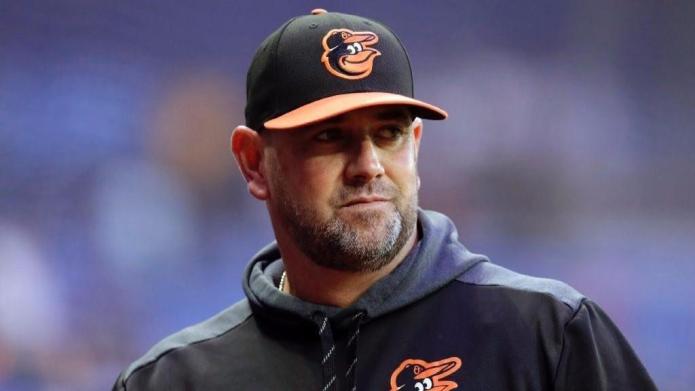
“I think the mood in our clubhouse has been the same since day one,” Hyde told Melewski. “Guys haven’t let the losses affect them, and our preparation has been good. We come to win every night. We don’t sulk in the clubhouse or feel sorry for ourselves. We just have a sense that we need to get better, and we’re going to try and win every night.”
From players to coaches to management, everyone involved with the Orioles understands that this is going to be a long, difficult slog. They’re facing this, finally, with eyes wide open. But by establishing their culture, their way of going about their business, now, they’ll be prepared and ready for when the talent eventually arrives.

Orioles Analyst
Bob Harkins is a veteran journalist who has worked as a writer, editor and producer for numerous outlets, including 13 years at NBCSports.com. He is also the creator of the Razed Sports documentary podcast and the founder of Story Hangar, a network of documentary podcasters.