
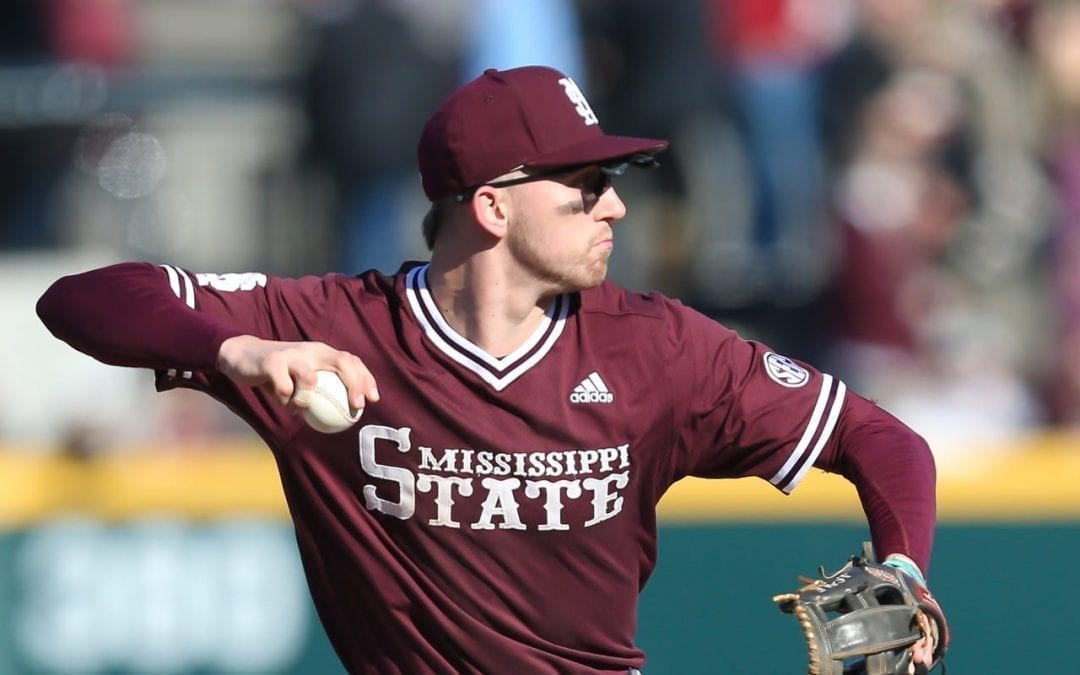
It’s been about a week since the Baltimore Orioles added six new talents to the pipeline in the 2020 Major League Baseball draft and hopefully Orioles fans are feeling a bit better about the fine young talents joining the Birdland family.
I spend too many hours a week watching minor league baseball (when there is a season), have enjoyed diving into the college baseball world over the last few years, and spend day after day reading, writing, and now podcasting about the Orioles minor league system. I’m far from a scout, but do have an unhealthy obsession with prospects and passion for Orioles baseball. I can confidently say that this system is one on the rise and there are a long list of reasons why fans should be excited about the 2020 draft class.
(You can discuss this on the BSL Board here.)
Ignore the mock drafts you read, forget about the pre-draft prospect rankings, and block out the industry consensus about how the draft was set to unfold. One thing has become clear after two drafts under Mike Elias, the Orioles have a model in place that they believe works, they trust the model, and each player selected is the best available player that fits the model and plans for what type of team Elias wants.
When looking at the 2020 draft class selections on their own, the Orioles were able to grab four college bats with legitimate major league tools and two high upside high school talents who may end up being the gems of this class. Power potential, speed, and athleticism are common descriptors used by the experts when evaluating all five bats, keywords that we typically don’t see attached to very many Orioles prospects already in the system.
High strikeout totals are the norm in baseball, so discussions about Heston Kjerstad and Jordan Westburg’s strikeout numbers have no impact on how I view these two picks. Kjerstad’s power from the left side should fit in beautifully at Camden Yards and in the AL East, while Westburg’s power potential and speed are intriguing.
Could the Orioles have made a bigger splash with the 30th overall pick? Absolutely. However, Westburg is an SEC bat who produced 50 extra-base hits in 124 college games and a .385 OBP, while also posting impressive numbers in the Cape Cod League last summer. He’s someone who has first round grades and potential to greatly increase his value if he can tap into his power.
Hudson Haskin is the one name that made me raise my eyebrows, but after learning more about the draft-eligible sophomore out of Tulane, Haskin seems like the ultimate “trust the process” pick. If he can develop into the 20/20 player scouts believe he can become, you’re looking at the type of player many are hoping Ryan McKenna develops into, if you haven’t given up on McKenna yet.
Haskin checks a lot of boxes, including the ability to hit for a high average (.372 as a freshman), get on base at an impressive clip (.457 OBP in 73 games), impact games on the basepaths (17 stolen bases in summer ball/5 for 6 at Tulane), and play a solid defense. Some have noted his potential to be a first or second round pick next year, but the Orioles were able to bring him in and get him in the system now.
The Orioles have added middle infielder after middle infielder recently, but these have been Quad-A type players and stopgap pieces. Ole Miss shortstop Anthony Servideo fits the mold of a potential true utility type player with his plus-defense, great speed and the ability to impact the late-innings of a game. Combine that with a .405 career OBP in college and near 16% walk rate and the Orioles have someone who looks to have a higher floor and ceiling than any current shortstop/utility option (Richie Martin, Mason McCoy).
As for the two high school picks, Coby Mayo has an impressive power tool and a large frame sure to produce significant power as he develops and moves through the system. Many pre-draft rankings had Mayo as a Top 100 prospect. Carter Baumler is a risky prep righty, but can already touch 94 mph and has a smooth/repeatable delivery. Considered a tough sign away from TCU, Baumler reportedly turned down three other offers of $1 million+ to sign with the Orioles. That’s a great sign as to how prospects view the Orioles player development system.
It will take a few years to evaluate the 2020 draft class, but my overall initial takeaway is that the Orioles walked away from the draft with an improved farm system, taking another step in the right direction.
Orioles Undrafted Free Agent Signings
After a 48-hour quiet period, MLB teams were allowed to begin signing undrafted players for up to $20,000, a very small price compared to what many players would have made in a normal 40 round draft.
The Orioles quickly signed three players in RHP Ryan Watson out of Auburn, 1B/DH JD Mundy from Radford, and RHP Brandon Young out of Louisiana-Lafayette. More signings are likely to take place over the next few days.
It seems as if college seniors and pitchers who profile as quick-moving relievers make up the majority of free agent signings across the league, as new roster rules at the NCAA level, including an additional year of eligibility for all spring athletes, make it easier for players to return. The prospect of improving their draft stock ahead of a longer draft in 2021 may also lead many of the top undrafted players to return to school.
Previously a 39th round pick of the Dodgers, Ryan Watson elected to go to his hometown Auburn Tigers where he worked mainly out of the bullpen during his three-plus seasons. He posted a 4.87 ERA, 1.52 WHIP, and a 41/18 K/BB ratio in 40.2 IP as a junior, but was off to an impressive start to his senior season before Covid-19. In 7.1 IP, Watson had given up just one run off four hits while striking out seven and walking one.
He was named the top prospect in the 2018 South Florida Collegiate League. From a Perfect Game report on Watson during his time in summer ball,
“Watson certainly looks the part at 6-foot-5, 215-pounds, but his effectiveness has been inconsistent over his first two years at Auburn, mostly coming out of the bullpen. His stuff is legitimate with a sinker/slider profile given his low-90s heat with late movement and low-80s slider. He can throw both a curveball and a changeup, and his deep arsenal allowed him to serve as a starter this summer, gaining some valuable on-the-mound experience.”
Brandon Young is an intriguing arm. Standing at 6’6” and 210 pounds, Young ended his college career with a 3-0 record, a 1.09 ERA, and 37 strikeouts in 24.2 IP. That included a three-hit shutout where he struck out 11 against Sam Houston State. He gave up just one extra-base hit during his shortened 2020 campaign.
Young throws four pitches and was one of the top starting pitchers in the Sun Belt this year, but his size and the way he attacks hitters could be valuable in the back end of a bullpen. For those who closely follow the Orioles minor leagues, Young is one to put on your radar.
Lastly, there’s JD Mundy, a power-hitting first baseman out of Radford, by way of Virginia Tech. The Orioles need first basemen in the minor leagues and Mundy should put up some decent numbers as he works his way through the system but there are a lot of questions past that, including his ability to play the field.
He hit 12 home runs in two seasons at Tech, followed up by 17 at Radford, 13 of which came last season. He added 29 more in three summer ball stints, including leading the Valley Baseball League in home runs (14) back in 2018.
Mundy hits the ball hard, can find the gaps, and posted a career .403 OBP in college, but he spent a lot of time at DH and transferred from Tech due to lack of playing time at first base. For now, he fills a void in the minor league system.
Follow @BSLOnTheVerge for updates on any new free agent signings and be sure to subscribe to our podcast on iTunes or Spotify!

Orioles Analyst
A former high school teacher and coach in the mountains of Virginia, Nick Stevens has been writing about the Baltimore Orioles and their minor league system for five years. When he isn’t at a minor league stadium, he’s enjoying a Wizards game or supporting his alma mater, James Madison University. Co-Host of The Verge.