
There’s a Mark Trumbo-sized gap on the Orioles roster as the Winter Meetings go on and it’s unclear how to fix it. Simply signing Trumbo makes some sense, but the asking price, well, doesn’t. At this point, there are rumors of four years and perhaps as much as $20 million being thrown in Trumbo’s general direction, leading some to question not only if the team should look elsewhere, but where.
(You can discuss this on the BSL Board here.)
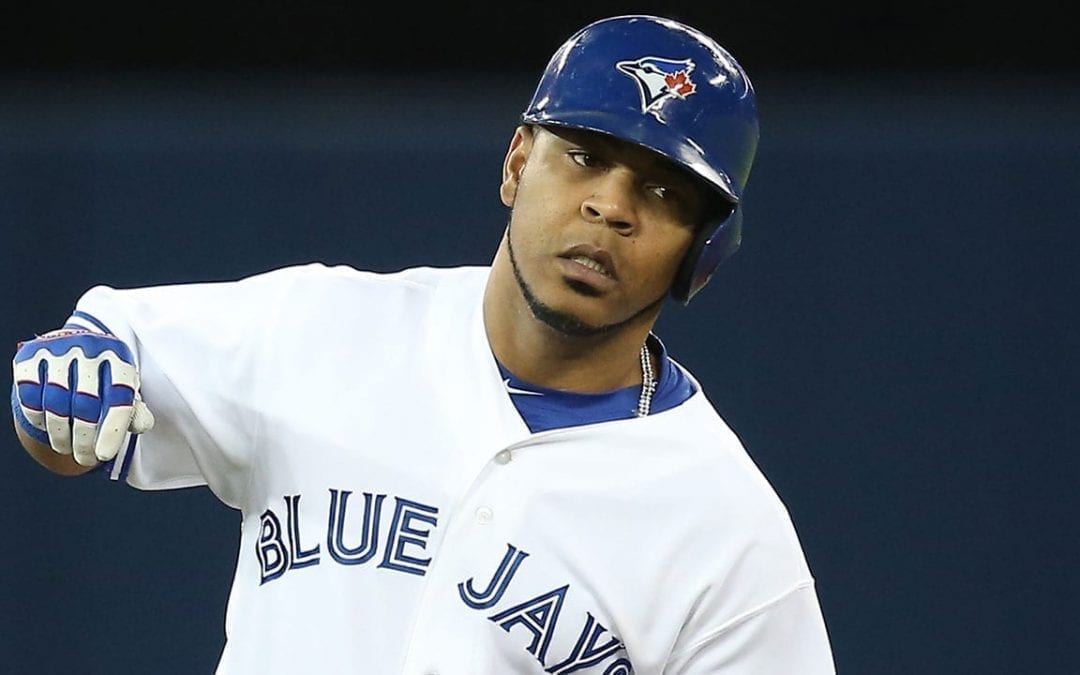
At the same time, the market appears to be shrinking a bit on Edwin Encarnacion. On a market where he is perhaps the most polished all-around power hitter available — both now and at the outset — there’s been more smoke about the teams who are out on Encarnacion as opposed to in, for some reason or another. The Toronto Blue Jays have apparently moved on, first signing Kendrys Morales before turning most recently to Steve Pearce. Things have also quieted on the Houston Astros front after the team opted to bring back Carlos Beltran.
Something isn’t adding up here. Is Encarnacion’s asking price too high? Why did the Blue Jays, whom one might suspect hold all the cards, opt to sign two inferior hitters at market rate? Neither contract is egregious, but neither player is anywhere near the caliber that Encarnacion is either. Neither is likely to have the cult-like status that the Edwing developed at the Rogers Centre. Sure, the Blue Jays might be gettin’ out while the gettin’ is good on Encarnacion, so to speak — he’ll spend all next year at 34 years old — but Morales is only 164 days younger than Encarnacion. For all baseball intents and purposes, they’re the same age, as baseball measures age by how old a player will be on July 1 of any given year.
Maybe the Jays think a three-year deal will have a better payoff than a five-year one with Encarnacion, but again the front-end payoff with the incumbent was bound to be worth it. Keep in mind, this is probably a Jays team that’ll have to rebuild or at the very least retool near the end of that time frame. Aaron Sanchez and Marcus Stroman will still be plenty young, but that offense will look drastically different. In fact, it’ll look a lot different this year, with guys like Pearce, Morales and Justin Smoak playing more prominent roles in the places of Encarnacion and, most likely, Jose Bautista.
If the plan was to kick the can down the road a bit, these moves are a bit of a head scratcher, are they not?
Nevertheless, there’s potential for the Blue Jays’ loss to be the Orioles’ gain. Encarnacion’s market is to the point where the Cleveland Indians are being considered a serious suitor. That’s not meant to be a dig at Cleveland necessarily, but it’s not a team that’s typically at the forefront of free-agent negotiations. They did make some noise by signing Nick Swisher and Michael Bourn a few years back, but neither of those really panned out. Their window is as open as it’ll ever be coming off an AL pennant, but should they be considered a team that the Orioles can’t go toe-to-toe with in a bidding war? That seems unlikely.
There has been some question in the saber community about how Encarnacion would age, and that’s fine. It’s totally understandable. But while he’s entering his mid-30s and is not considered a great defender, but he does have a hitting skill set that’ll age better than most. He takes plenty of walks — in the 12-13 percent range after not walking much at all to start his career — and for a power hitter doesn’t strike out much at all. His career rate is 16.2 percent as far as strikeouts are concerned, and he’d been quite a bit lower before it spiked to 19.7 percent this season. That’s still a full percentage point beneath the 2016 AL average rate (20.7 percent).
But even if Encarnacion doesn’t hit 35-40 bombs for the rest of his life, he should still age fairly gracefully. He has room to strike out more. He has room to walk a little less. He has room to hit doubles instead of home runs. Maybe instead of being a .900 OPS guy — something he deviated from this season (.886) for the first time since 2011 — he loses 80-100 points. Nobody wants to pay premium bucks to a DH-only who isn’t super elite, but that’s still about league-average production from a DH. In 2016, AL DHs on the whole hit .258/.330/.480 — an .810 OPS. Can we logically deduce if the Indians are interested that he’s not going to sign for five years? Or maybe not even more than three? Maybe four is the right number. Would four years and $80 million get it done? Maybe not if those are the numbers Trumbo is hearing, but there’s reason to go a bit higher for Encarnacion than Trumbo, all things considered.
The Steamer projections are a fairly big believer in Encarnacion next season. They have him hitting .263/.351/.494, which is about identical to last year with a 35-point reduction in slugging percentage. With no defensive value it’s probably a 2.5-3.0-win player, all things considered.
While age works in Trumbo’s favor — he’ll be 31 all next season — there’s less reason to believe he’ll age well. For one, he hasn’t really aged well to this point in the first place. He’s hit just .251/.303/.473 in his career, and that falls to .250/.300/.458 if we subtract 2016. That’s not to discount 2016 like it never happened, but nothing really stands out in his rates that makes it look sustainable.
He walked one percent more often in 2016 than 2015, but still less than 2014. He struck out more in 2016 (25.5 percent) than 2015 (24.2 percent). His 2015 slash line (.262/.310/.449) looks roughly the same to 2016 (.256/.316/.533) with the exception of power, which he flashed at an unprecedented rate at age 30 in a ballpark that invited it. Camden Yards had a home-run park factor for righties of 109 in 2016, essentially suggesting it was nine percent better than average for righties to hit the long ball. By comparison, Safeco Park was just a 92 for right-handed hitters to hit home runs at in 2015. In other words, home park played at least somewhat of a factor.
Trumbo doesn’t have skills that project to age well, either. He’s struck out in excess of 20 percent in every year of his big-league career, and has been over 25 percent on multiple occasions — including this past season. He walks at about a league-average rate, but his chase rate is somewhere between 5-7 percent above league average year in and year out. That leads me to suspect most of his walks are respect walks, as opposed to because he has a discerning eye. For instance, as a rookie Trumbo walked just 4.4 percent of the time. That mark steadily climbed th next couple years as he proved to the league that he had power, but as that dwindles again as he ages, the walks will most likely go with it.
So he’s got strikeouts that aren’t backed by a sustainable source of walks. He’s most likely leaving a home park that’s pretty well cut out for his skill set. He doesn’t play defense whatsoever, and he’s bound to get a multi-year deal that’s worth far more than he’s probably going to provide.
Maybe I’m making this harder than it needs to be. Even despite the fairly big gap in ages, if someone were to tell me I could sign Encarnacion and Trumbo the the same deals, plus/minus say, $2 million per year, I’m taking Encarnacion the Elder every single time.
Thoughts?

Orioles Analyst
Warne is a Minnesota Twins beat reporter for 105 The Ticket’s Cold Omaha website as well as a sportswriter for Sportradar U.S. in downtown Minneapolis. He also contributes to FanGraphs / RotoGraphs.