
The Baltimore Orioles face one of their most crucial offseasons in recent memory, one in which they’ll make decisions that will set the path of the organization for years to come.
Perhaps the most important decision is picking the person who will replace Dan Duquette as VP of Baseball Operations/General Manager, the person who will be in the driver’s seat for all key decisions to follow.
My colleague John Perotto profiled two potential candidates (Astros Assistant General Manager Mike Elias, and Cubs SVP of Player Development and Scouting Jason McLeod) here.
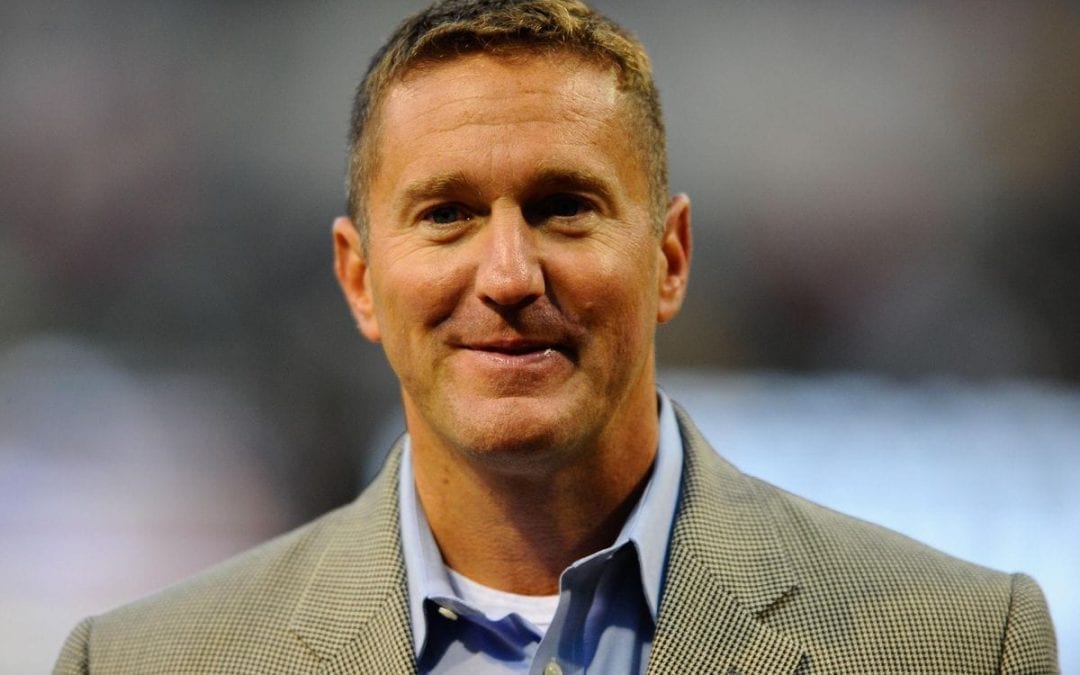
I’m going to take a look at Josh Byrnes, who is Senior Vice President of Baseball Operations for the Los Angeles Dodgers.
(You can discuss this on the BSL Board here.)
JOSH BYRNES
Given his background and experience, Byrnes has received little buzz on the general manager job market over the last few years. There could be a number of reasons for this.
At 48, Byrnes is a bit old to be considered an on-the-rise-type candidate. The perception, perhaps, is that the two-time general manager has had enough shots at running an organization and has not shown enough success in those roles to warrant another chance. There is also the question of whether he would leave a pretty sweet gig in Los Angeles, where he is a low-profile cog who is allowed to work his magic behind the scenes. Indeed, if the power-quad group of CEO Stan Kasten, President Andrew Friedman, General Manager Farhan Zaidi and Byrnes was a rock band, Byrnes would be the bass player.
Indeed, as late as August it was reported that Byrnes was likely to stay with the Dodgers.
But given Byrnes’ experience and levels of success in a number of areas, it would behoove the Orioles to at least reach out and test the waters.
Byrnes played baseball at Haverford College, where he graduated in 1992. Two years later he landed a job as an intern with the Cleveland Indians. From there his career steadily blossomed. By 1998 he was scouting director in Cleveland, then Dan O’Dowd hired him as assistant GM in Colorado a year later. He took the same job under Theo Epstein with the Red Sox in 2001 and was named General Manager of the Arizona Diamondbacks in 2005.
In a move that was widely criticized, the D-backs fired both Byrnes and the manager he had hired – some guy named A.J. Hinch – in 2010. Byrnes was quickly snapped up by San Diego Padres GM Jed Hoyer as SVP of Baseball Operations, and he replaced Hoyer as GM when Hoyer left to join Epstein with the Cubs in 2011.
The Padres fired Byrnes in 2014, and that’s how he ended up with the Dodgers.
Through it all, Brynes has shown a couple of things. First of all, he seems to have a good feel for what makes a good manager. He took a lot of heat for hiring Hinch, who was 34 years old with zero managing experience at the time. Now Hinch is a world champion manager in Houston.
Byrnes also was instrumental in the Dodgers’ hiring of Dave Roberts, pitching him heavily to Friedman after Don Mattingly was let go. The two were together in San Diego, but their history actually dates back to when Byrnes was in Cleveland and Roberts was an Indians minor leaguer. The two were also together in Boston when Roberts made “the steal” in the 2004 ALCS.
Another thing Byrnes has shown an aptitude for is talent evaluation, at least in regards to the draft. In Arizona, Byrnes was responsible for drafting Justin Upton, Max Scherzer and Brett Anderson among others. His 2009 draft was loaded with A.J. Pollock, Matt Davidson, Chris Owings, Keon Broxton, Chase Anderson and Paul Goldschmidt (8th round!).
In San Diego, his 2012 picks netted the likes of Max Fried, Zach Eflin, Travis Jankowski and Mallex Smith, while 2013 landed Hunter Renfroe.
His trade history is a bit more checkered. It’s hard to find any deal of long-lasting consequence in Arizona. In San Diego, there is some good (Mat Latos for Edinson Volquez, Yasmani Grandal, Yonder Alonso and Brad Boxberger), some bad (Anthony Rizzo and Zach Cates for Andrew Cashner and Kyung-Min Na) and a whole lot of inconsequential.
In spite of some of his obvious assets, Byrnes’ history is mixed. He clearly has a vision for franchise culture, for how he wants a franchise to operate and how he wants a GM, manager and the players to communicate. He made progress with that in Arizona, but less of it in San Diego, and nobody was really surprised when they let him go.
As ESPN’s Keith Law wrote at the time:
“The San Diego Padres’ decision to relieve Josh Byrnes of his duties as general manager is unsurprising, and was probably overdue, given the team’s poor performance at the major league level and lack of production from young players, especially those acquired in trades or handed long-term contracts.”
Whether or not Byrnes would have eventually succeeded in either Arizona or San Diego are impossible to say, but it’s clear that he could not sell his vision to ownership in either place. He said as much last year:
“We knew we had to win back then (in Arizona), but the whole intent of it was to establish these types of dynamics. I think that’s the way it is everywhere in baseball now. The front office, the manager, the coaches and the players are largely on the same page. There’s a log of communication. There’s a lot of idea sharing. And decision are born out of that process.”
Building a culture and a system takes patience. But you also have to show signs of progress along the way. Byrnes could neither show enough of those signs nor produce the needed buy-in from above in his previous stops as general manager.
If the Orioles are serious about creating and building a new culture, about pushing into this new age of baseball, Byrnes wouldn’t be a bad choice. But he might not be the best one, either.
And you could argue that there is enough of a history there to show that Byrnes might be best suited to remain in his current role, where he is an important part of a well-oiled machine that has both money and a solid long-term view, as opposed to being the man steering the ship.

Orioles Analyst
Bob Harkins is a veteran journalist who has worked as a writer, editor and producer for numerous outlets, including 13 years at NBCSports.com. He is also the creator of the Razed Sports documentary podcast and the founder of Story Hangar, a network of documentary podcasters.