

Outside of John Means, the Orioles have struggled recently to turn pitching prospects into consistent producers at the big league level. As the rebuild continues, fans get to see more of the Orioles’ young pitching prospects as they try to make an impact. Players like Keegan Akin, Bruce Zimmermann, Dean Kremer, Alex Wells, and Zac Lowther all had significant opportunities in 2021, but mostly faltered as the season went on. Beyond this group, players like Kyle Bradish, Mike Baumann, and Kevin Smith will also have the chance to prove themselves this upcoming season.
The Orioles are certainly hoping some of these pitchers can solidify their spots on the roster prior to the highly-anticipated arrivals of stud prospects Grayson Rodriguez (#1 ranked RHP prospect in MLB) and DL Hall (#7 ranked LHP prospect in MLB). Outside of Rodriguez and Hall, who I consider to be in their own tier, let’s get into the top 5 most promising unproven O’s pitchers who have yet to make much of a positive impact (if any) at the big league level.
1) Kyle Bradish
I’ve been getting more and more excited about Bradish the more I watch him. Since joining the Orioles (along with 3 other pitching prospects) as part of the Dylan Bundy trade with the Angels back in 2019, Bradish’s fastball velocity has ticked up from the 89-94 range to the 92-97 range. Along with his fastball, Bradish throws a mid-80s power-curve and a hard slider in the upper 80s, both of which, particularly the slider, show potential to develop into above average out-pitches. Bradish’s somewhat unique delivery naturally hides the ball until late in his windup, which has proven to be particularly deceptive against right-handed batters. Bradish’s combination of pitch arsenal, deception, and size bodes well for missing bats, as evidenced by his great 11.2 SO/9 in his minor league career. Bradish’s biggest weakness right now is control, as he’s allowing 4.3 BB/9. This walk rate would certainly cause Bradish problems in the majors, but the good news is his walk rate has improved over the past 3 seasons, dropping from 4.9 in 2018 to 4.7 in 2019 to 3.9 in 2021. If Bradish can keep this trend going, I view him as a solid middle of the rotation piece for the Orioles’ future rotation.
Future projection: Middle of the rotation starter
2) Mike Baumann
There’s a lot to like about Baumann – a big frame, a mid-to-upper 90s fastball and a plus power slider. For the most part, Baumann has been successful in the minors, pitching to a 2.94 ERA, 1.13 WHIP, 8.9 SO/9, along with a no-hit gem for the Baysox back in 2019. Baumann’s fastball has late life that can get past major league hitters assuming he can continue to improve his control. While his delivery is simple and repeatable, his long arm action sometimes lends itself to control problems. Baumann’s curve and change-up have both improved, but are still comparatively weak for a consistent big league starter. The Orioles will likely give Baumann a ton of opportunity to find success in the rotation, but I believe it will ultimately come down to the development of his breaking pitches. The good news for Baumann, and the reason he just slightly edged-out Zimmermann in this ranking, is that even if he struggles as a starter I think his above-average fastball and slider combination project well for a role as an impactful late-game reliever. I still lean slightly towards Baumann developing into a solid mid to back-of-the-rotation starter, maybe a #4 in the rotation, but he’ll be an important arm for the Orioles regardless of whether it’s in the rotation or in the bullpen.
Future projection: Mid/back of the rotation starter
3) Bruce Zimmermann
Zimmerman came over from Atlanta as a key part of the 2018 Kevin Gausman and Darren O’Day trade. While Zimmerman has struggled for the most part since joining the O’s, pitching to a 5.30 ERA with a 1.47 WHIP, he has flashed the most at the big league level amongst this list of pitchers (although some of them have yet to debut). Zimmermann doesn’t have overpowering stuff and isn’t as imposing on the mound as Baumann or Bradish, but his control is likely the best of the group right now. When Zimmermann is on his game, he has the ability to dot fastballs right on the corners, and follow that up with effective change-ups and sliders. Zimmermann’s change-up surprised me at times last year and could certainly develop into a John Means-esque put-out pitch. Zimmermann’s slider, which still needs to get more consistent, can be filthy, and has made hitters look silly – below see this slider from last spring. The more I watch Zimmermann, the higher I get on him; maybe it’s just my Orioles rose-colored glasses, but I’m expecting a big step up for Zimmermann this year and view him as another reliable back-end starter for the O’s going forward.
Future projection: Back of the rotation starter
4) Kevin Smith
Acquired from the Mets in 2020 as part of the Miguel Castro trade, Smith should also get plenty of opportunity at the major league level for the O’s this year. As a full-time starter in the Minors in 2019, Smith led the Mets system in strikeouts, strikeout rate and strikeout-to-walk rate. After being called up to Triple-A Norfolk after dominating in Double-A Bowie, Smith struggled, pitching to a 6.23 ERA over 15 starts. Smith’s stuff doesn’t necessarily jump out at you right away; a low 90s fastball, an average change-up, and a slider with late life that has proven itself to be a solid out-pitch particularly against left-handed batters. Smith mainly got in trouble due to command issues in 2021 (command is a common theme here…) and will certainly need to drop his walk rate to stay consistent in the big leagues. While Smith has predominantly been a starter in the minors, I expect him to ultimately end up as a bullpen piece who can eat up innings and serve as a long man when needed (which is very valuable for the O’s who tend to pull their starters very early, typically for good reason…). I view Smith and the remaining pitchers as being in a slightly lower tier than those first 3 guys above, but Smith is certainly one of the more intriguing remaining options here.
Future projection: Reliever (potential long-reliever)
5) Zac Lowther
This 5th spot was a tough one. I think Alexander Wells has the potential to develop into a solid arm, and it’s still hard for me to believe that Keegan Akin and Dean Kremer are actually as bad as they were in 2021. With that being said, I’m going with Zac Lowther for the fifth spot here. Lowther spent most of the summer going back and forth between Triple-A and the big leagues, and mainly struggled wherever he was. However, Lowther had three impressive starts in September, ending his up and down season on a relative high. Most of the trouble Lowther got into in 2021 was a result of fastball placement, simply put, big leaguers were crushing it (.338 BA against in 2021). Lowther’s spike-curve showed glimpses of being a reliable out-pitch, but is still rather inconsistent. Similar to Kevin Smith, I view Lowther’s future role as entirely contingent on his ability to improve his fastball control and really refine his curveball. The truth is it’s tough to be a solid big league starter without at least 3 average to above-average pitches. Ultimately, I think Lowther will spend some time as a #5 starter, and most likely move to more of a swingman role, serving as an innings-eater out of the bullpen and an occasional emergency starter.
Future projection: #5 starter initially, likely move to bullpen if/when other players solidify their rotation spots
If the Orioles somehow hold on to Means, the thought of a 2023 rotation consisting of Rodriguez, Means, Hall, Bradish and Baumann with Zimmermann, Smith, and Lowther vying for spots is an exciting thought (at least for me). It will take some time for these young guys to get used to pitching at the big league level, but my confidence level that these pitchers can form a solid rotation continues to increase.
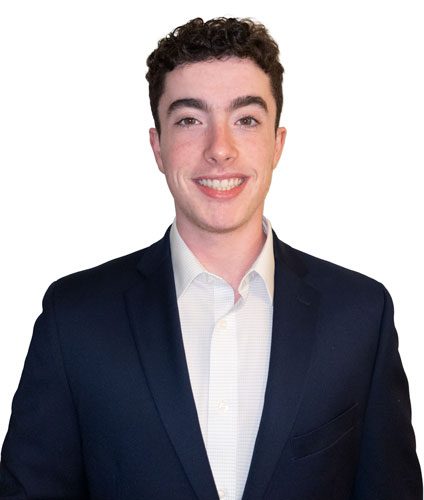
As a Baltimore native, Zach is an avid Orioles and Ravens fan. After interning for the Baltimore Orioles, he currently works as a Senior Quantitative Risk Analyst for OneMain Financial and is a part-time graduate student studying Data Science at the University of Michigan.