
Maryland lost 54-3 at home to a UCLA team that was 3-9 a year ago. The Terps gained 181 yards, rushed 30 times for 39, went 1-for-15 on third down and threw four interceptions, two returned for touchdowns. It was UCLA’s largest margin in a conference road game since 1955. The student section emptied in the third quarter for the second straight home game.
Mike Locksley has not been fired yet, but the writing on the wall is pretty clear. At the minimum, yesterday was the unofficial end of his era.
What come’s next?
Part I: The rationale for moving now
In-season firings used to be a sign of panic. They are now a sign of organization, and last year’s cycle made that clear.
Virginia Tech fired Brent Pry on Sept. 14th, three games into the 2025 season. The Hokies hired James Franklin on Nov. 17th on a five-year, $41.75 million deal, gave him a full portal cycle, and he brought 29 transfers with him. That Virginia Tech team came to College Park and won.
Moving on from Locksley is inevitable. Knowing that, there isn’t great rationale for waiting, even when factoring in the $1M that could be saved by waiting until after the season.
The money
| Timing | Buyout owed | Note |
| Before Dec. 31, 2026 | $9.94M | Washington Times, via a Public Information Act request. USA Today reports $9.2M. Both figures are in circulation. |
| After the 2026 season | $8.9M | Waiting out the year saves about $1M |
| After the 2027 season | $4.5M | — |
| After the 2028 season | $0 | Contract expires |
Half the buyout comes due as a lump sum within 60 days of termination. Locksley would be owed 65 percent of his remaining compensation under the “best interests of the University” provision, with no mitigation or offset, meaning Maryland pays in full regardless of what he earns elsewhere. His total contract runs $30.5 million through 2028, with 2026 compensation of $6.4 million.
Set that against the roster. Maryland is spending an estimated $21 to $25 million on players this year. The buyout is roughly 40 percent of one season’s roster budget, and waiting until December saves about a million dollars. A million dollars is real money. It is not worth six weeks of head start in a coaching market where the good candidates come off the board in November.
Worth remembering the context: last November, Athletic Director Jim Smith retained Locksley and publicly committed to more NIL money, explicitly noting a buyout that would then have been $13 million. Maryland chose to spend on the roster instead of the coach. The buyout has dropped by roughly $3 million in the meantime.
The roster argument
The strongest case for acting early has nothing to do with money. Maryland is going to lose a large portion of this roster in the portal no matter what happens, because that is what happens to a 2-2 team heading into a Big Ten schedule with a coach whose future is in the news every week. The only variable is whether the next staff is in place to start recruiting against that exodus in November or in January.
Franklin got the full window at Virginia Tech and turned it into 29 transfers and a 3-0 start. That is the entire argument.
Part II: What the Maryland job actually is
Every coaching search runs aground on the same thing: administrations describe the job they wish they had. Here is the one Maryland has.
The structural problems
- Maryland is not a historical power. The program has one claimed national title, in 1953, and has never been a consistent Top 25 presence in the modern era. It has produced nearly 200 NFL draft picks and fifteen first-rounders, including Vernon Davis and Darrius Heyward-Bey in the top ten, so the talent has always come through. The winning has not followed it.
- College Park sits between two pro markets. Baltimore and Washington both have NFL teams, and Maryland will never own a fall Saturday the way Penn State owns central Pennsylvania or Nebraska owns a state. Any plan that depends on becoming the region’s primary football interest is a plan that fails.
- The spending is mid-pack and the gap at the top is enormous. Maryland’s roster sits 36th nationally and 10th of 18 in the Big Ten, against a conference average of $27 to $31 million. Ohio State and Oregon spend $48 to $54 million. Maryland is not underfunded so much as unexceptional, and unexceptional in the Big Ten means losing to Ohio State by 40.
- The endowment is the smallest among the peers worth comparing to. $2.2 billion, roughly 25th to 30th among Power Four schools. Michigan is at $18 billion, Texas’ system at $42 billion. This is the ceiling on how fast Maryland can move.
The assets, which are more real than the fanbase thinks
- The recruiting base. The DMV produces elite talent every year, and Maryland has proven it can win those battles. Zion Elee is the highest-rated recruit in program history. The staff has also pulled blue-chip players out of Virginia, including Jaylen Gilchrist and Messiah Delhomme.
- The facilities are no longer an excuse. Jones-Hill House and the SECU Stadium upgrades brought Maryland into the modern era. This is not a program asking recruits to overlook the building.
- The alumni earn more than the peers Maryland loses to. Median alumni income ten years out is roughly $68,000, second in the Big Ten behind Northwestern and top five among all Power Four schools. That is ahead of Penn State at $65,000, Ohio State at $63,000, Georgia and Alabama. Maryland graduates make money.
- And they made it themselves. Roughly 90.7 percent of Maryland’s wealthy alumni are self-made, second nationally behind only Caltech and ahead of every SEC school, Michigan and Texas. Sergey Brin and Kevin Plank are the headliners. This is an entrepreneurial alumni base, not an inherited-wealth one, and it should be approached completely differently than Penn State approaches its own.
- Fundraising momentum is real. $945 million raised toward a $2.5 billion campaign by late 2025, with an annual target around $320 million. For a school that joined the Big Ten in 2014, that trajectory is good.
Part III: An honest ledger on Locksley
Whatever happens, the accounting should be fair, because the next hire depends on diagnosing the actual failure rather than the convenient one.
What he did well
- He took a program at its lowest point after the Jordan McNair tragedy and the DJ Durkin fallout, and he restored its credibility. That is not a small thing and it should not be written out of the story.
- Three straight winning seasons and bowl wins from 2021 to 2023, which Maryland had not managed in decades.
- He recruits. High school and portal both. The talent on this roster is better than the results, and the 2026 class and retention effort were genuinely good work.
- He is from here, he cares about here, and he has been an ambassador for the program in a way a hired gun would not be.
The primary knock
The criticism is not that Maryland lacks talent. It is that the talent does not get better once it arrives.
Maryland returned 71 percent of its production this season, second-most in the country. It brought back its quarterback, its best edge rusher and most of its young core, and Jim Smith gave the program more money to do exactly that. Four games in, the Terps have been outscored 89-29 in their last two and lost to a team that finished 3-9 last year by 51 points.
Development, not acquisition, is the failure. And that is the specific thing the next hire has to be evaluated on.
Part IV: Who is actually running this search
This gets skipped in most of these conversations and it probably matters more than the candidate list.
Jim Smith has never hired a football coach
Maryland’s Athletic Director since July 2025 is a revenue executive, full stop. He arrived from the Atlanta Braves, where he spent five years as senior vice president of business strategy. Before that he was president and CEO of the Ohio State University Alumni Association, running more than 80 staff and a $17 million budget. Before that he held senior roles at Arthur M. Blank Sports and Entertainment, running all revenue and marketing for the Atlanta Falcons and Atlanta United and helping develop the $1.6 billion Mercedes-Benz Stadium, including negotiating naming rights, sponsorships and suite sales. He is a Northwestern graduate with a master’s from Ohio State.
Three things follow, and all three shape what happens next.
- The search will be consultant-driven. Smith’s own hire was run by the firm TurnKeyZRG, and he said on arrival that he planned to lean on the counsel of Gene Smith, the retired Ohio State athletic director. That points toward a more professional process than Maryland’s hiring history suggests, and toward Ohio State-tree names surfacing.
- Retaining Locksley last November was a finance decision. A revenue executive looked at a $13 million buyout and declined, then publicly committed to spending on the roster instead. That number is $9.94 million now and drops to $8.9 million in January. He will move when the math clears, and he will be less sentimental about it than a football lifer would be.
- He is better equipped for Maryland’s revenue problem than its football one. That is not a criticism. It is the most important thing to understand about this administration, and we return to it in Part VI.
And Maryland already has a General Manager
Geroy Simon has held the title of Executive Director of Revenue Share Management and General Manager since January 2025, hired by former athletic director Damon Evans. Simon is a Maryland alum who ranks second in school history with 185 receptions, a Canadian Football Hall of Famer, and a decade-long CFL front office executive who was Edmonton’s assistant general manager and then interim general manager.
His job is narrower and more technical than the title implies. Maryland describes it as department-wide revenue-share management: player contracts, roster construction, multi-year salary cap management, analytical modeling and budget forecasting across football, men’s basketball and women’s basketball. He is effectively the chief financial officer of Maryland’s rosters rather than a football scouting director.
That distinction matters for what follows, because what Maryland lacks is not cap management. It is the football side of personnel.
Part V: The candidates, ranked
Ranked by fit with the job described above rather than by name recognition. The question is not who is the best coach. It is who is the best coach who would take this job and succeed at it.
1. Charles Huff, Memphis
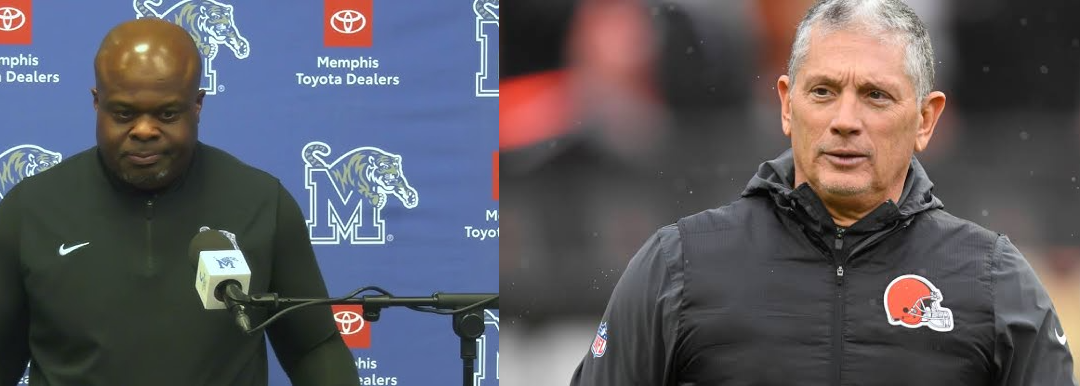
Pros. The most obvious fit on the board, and ESPN named him specifically as a top candidate if Maryland opens. He is from Denton, Maryland. He won a Sun Belt title at Marshall in 2024, then improved Southern Miss by six wins in a single season, and now runs a Memphis program that has vaulted its last three coaches to Power Four jobs. He has SEC, Big Ten and NFL assistant experience, including time with Nick Saban. He has demonstrated the one thing Maryland most needs: taking over a roster and making it better immediately.
Cons. Four jobs in four years is a pattern, and Maryland would be asking a coach who keeps moving up to stop moving. If Memphis wins big this fall he will have better options than a Big Ten team that just lost 54-3. Maryland would likely have to be aggressive and early.
2. Jake Dickert, Wake Forest
Pros. Not on anybody’s Maryland list, which is exactly why he belongs on it. Dickert has taken two genuinely difficult jobs and won at both, going 32-24 between Washington State, which he held together through conference collapse, and Wake Forest, where a 9-4 debut with a roster projected among the ACC’s weakest got almost no national attention. He is 43. If the diagnosis is that Maryland needs someone who develops and overachieves rather than someone who buys talent, he is the profile.
Cons. He grew up in Wisconsin and played there, and ESPN links him directly to that job if it opens. Maryland would be a consolation prize in a cycle where he may have a better one. No DMV ties.
3. Billy Napier, James Madison
The JMU job changes everything about this candidacy. Napier is not a fired coach sitting at home. James Madison hired him on Dec. 6, 2025 on a five-year deal worth $1.05 million a year, to replace Bob Chesney, and he inherited a program that had just gone 11-1 and reached the College Football Playoff.
Pros. He is 62-35 as a head coach. At Louisiana he went 40-12 across four seasons with four Sun Belt title game appearances and two AP Top 25 finishes, both program firsts. He is 46. Every recruiting class he signed at Florida ranked in the Top 20 nationally, and he is regarded as a recruiter and developer first, which is precisely the diagnosis on Maryland. He learned under Nick Saban at Alabama as an analyst and then wide receivers coach. And Harrisonburg is two hours from College Park, inside Maryland’s recruiting footprint, which means he already knows the players and the high school coaches who matter here.
Cons, and they are specific rather than vague. Florida went 22-23, and the number that should worry Maryland is that his teams went 5-17 against ranked opponents and 0-14 against ranked opponents on the road. He was fired on Oct. 19th, 2025 after a 3-4 start, and he declined to give up playcalling even when his offense struggled and the calls to do so got loud. A Big Ten schedule is nothing but ranked opponents, many of them away from home. His career-long weakness is the exact thing this job demands most.
And he just got there. Leaving JMU after one season, having signed a five-year contract in December, is a real obstacle. Chesney stayed two years. Cignetti stayed five. Napier would be the fastest jump of the three, and JMU would have every right to be furious about it.
4. Glenn Schumann, Georgia Defensive Coordinator
Pros. ESPN describes him as possibly the most established name in a picked-over coordinator market. He is 36, has spent his entire career at Alabama and Georgia, and was a candidate for the North Carolina job that went to Bill Belichick. He would arrive with recruiting credibility and a defensive identity, which is the half of the roster Maryland has most consistently failed to build.
Cons. No head coaching experience, no regional ties, and an industry source told ESPN that Florida State makes more sense for him. Georgia is a great place to wait. Maryland would need to significantly outbid the market to move him, and hiring a first-time head coach is precisely the bet Maryland made in 2019.
5. Dan Mullen, UNLV
Pros. 113-65 as a head coach, with consistent success at Mississippi State, a national title game appearance as a coordinator, and one of the better quarterback development records of his generation. He went 10-4 in his first year at UNLV after three years away. ESPN specifically flags him as a fit for Big Ten or ACC openings this cycle. Maryland has a young quarterback who needs coaching, and Mullen is a quarterback coach first.
Cons. He is 54 and Florida ended badly, with real questions about his appetite for recruiting and the off-field demands of a modern job. Maryland would be hiring a proven ceiling-raiser who has already shown he can plateau. This is a three-to-five-year bet, not a ten-year one.
6. Bryant Haines, Indiana Defensive Coordinator
Pros. Broyles Award winner as the nation’s top assistant, architect of the No. 2 scoring defense on a national championship team, and the most prominent branch of the Cignetti tree. He is 40, with Midwest roots and coaching stops in Virginia and North Carolina.
Cons. ESPN notes NFL teams will likely want him as a coordinator, and he may go that route. He has never been a head coach, and the Indiana halo is doing a lot of work here. Being the coordinator on a title team is not the same as being the person who built it.
7. Mike Shanahan, Indiana Offensive Coordinator
Pros. Coached a Heisman winner and the No. 1 overall draft pick, ran an offense that finished third nationally in scoring and 12th in rushing. He is 36.
Cons. Same caveats as Haines, plus ESPN explicitly reports he is in no rush to leave Cignetti. Maryland has now hired an offensive-minded coach who could not fix an offense; hiring another offensive coordinator is a bet that the problem was the person rather than the approach.
8. Jim Schwartz, unattached
Schwartz was born in Halethorpe, went to Mount Saint Joseph in Baltimore, and was a four-year letterman at linebacker at Georgetown, where he was a team captain, an Academic All-American and a distinguished economics graduate. His first coaching job was as a graduate assistant at Maryland in 1989, working with linebackers. He later coached outside linebackers for the Ravens from 1996 to 1998. This is a Baltimore person whose career started in College Park.
Pros. He is available right now, which almost nobody on this list is. Schwartz resigned as Cleveland’s defensive coordinator in February after being passed over for the head job in favor of Todd Monken, and because he was under contract through 2026 he has been sitting out the season. No buyout to negotiate, no season to wait out. He has been a head coach, taking Detroit from 0-16 to a playoff berth in 2011. He won Super Bowl LII as Philadelphia’s coordinator and was AP NFL Assistant Coach of the Year in 2023, when his Cleveland defense led the league in total and passing defense and allowed the fewest yards per game by any team since the 2014 Seahawks. His trademark is building around dominant interior defensive linemen, and the list of players who became All-Pros under him runs Haynesworth, Suh, Dareus, Mario Williams, Fletcher Cox and Myles Garrett, who won Defensive Player of the Year twice in his scheme. Maryland’s defensive front is its most talented unit and its least productive.
Cons. The college experience is real but it is from 1989 to 1992. Four years as a young assistant at Maryland, Minnesota, North Carolina Central and Colgate, and nothing since. That means no current recruiting relationships, no NIL fluency and no experience managing a roster of teenagers in a portal era. He went 29-51 in Detroit. He is 59, and he stepped away from the Eagles entirely in January 2021 citing health, which is a fair thing to ask about rather than to speculate on.
Our read: the most interesting name nobody in College Park is saying out loud, and a genuinely better fit than the NFL-coordinator profile usually is, because he has actually run a building and he actually knows this one. Also the one candidate where a specific question needs a real answer before anything else: does he want to recruit?
9. Arthur Smith, Ohio State Offensive Coordinator
Pros. An actual former head coach, with three seasons running the Atlanta Falcons and three as an NFL coordinator before returning to college. He understands managing a building and a staff, which is a real and underrated part of this job.
Cons. His Atlanta tenure was mediocre, he has no college recruiting track record to speak of, and the NFL will likely come calling again. The profile is a program manager rather than a program builder, and Maryland needs the latter.
10. Brian Fleury, Seattle Seahawks Offensive Coordinator
Pros. The most interesting name on the list and the one with the deepest Maryland roots. Fleury is a Maryland native who began his playing career as a quarterback at Maryland before transferring to Towson, then returned to College Park as an intern and graduate assistant in 2003 and 2004. He later coached special teams and defensive backs at Towson. He is now the offensive coordinator for the defending Super Bowl champions, and his background is unusually broad: defensive quality control, offensive quality control, tight ends, run game coordinator, and stops with four NFL organizations.
Cons. He had never called plays at any level before this season. He has never been a head coach, never recruited, never managed NIL or boosters. The point our reader made is the right one and worth quoting back: this is not dropping down a level, it is a different job. Recruiting, collectives, donors, and coaching 18-year-olds instead of grown professionals. Being excellent at scheme does not make someone a leader of an organization, and the failure rate on NFL coordinators taking college jobs is high. If money is comparable, the question is genuinely which job he would rather do.
Our read: a fascinating candidate for a program with a stable infrastructure and a patient administration. Maryland is neither of those things right now.
The Biff Poggi question, which is its own category
Poggi belongs in this conversation and he does not belong on that list, and both things are true for the same reason.
He’s connected as anyone to Maryland’s actual recruiting base. He grew up in Baltimore’s Little Italy, graduated from Gilman in 1979, and coached there for nineteen seasons, winning thirteen state titles. In 2008 he wrote a $60,000 check to start a football program at Saint Frances Academy, a historically Black Catholic school in Johnston Square, then left Gilman to coach it and reportedly invested around $2.5 million of his own money, including funding 65 scholarships. He turned it into one of the best high school programs in the country, to the point that local teams stopped scheduling it.
That program is on Maryland’s roster right now. DeJuan Williams and Ryan Manning came out of Saint Frances. Carlton Smith spent his junior year there. Poggi made his money as a hedge fund manager, founding his own investment firm in 1986, which means he understands the collective and donor side of the modern job from the inside rather than as a thing coaches complain about. He was also generous enough with his assessment of this Maryland team in the preseason to predict eight wins, which has not aged well, but he gave it honestly.
Now the part that matters. He went 6-16 as the head coach at Charlotte and was fired with two games left in his second season. Michigan brought him back as associate head coach, named him interim for the Citrus Bowl after Sherrone Moore was fired, and then hired Kyle Whittingham for the full-time job while Poggi openly wanted it. He is 66 years old and is spending this fall as a Big Ten Network studio analyst, out of coaching entirely.
A 6-16 record at Charlotte is not a small thing to explain away for a Big Ten job, and Maryland cannot afford a hire that requires explaining. The honest read is that Poggi is the wrong answer to the question being asked and possibly the right answer to a different one.
Our recommendation: Maryland should hire Biff Poggi. Not as head coach, and not as general manager, because that job belongs to Geroy Simon and Simon is doing something different than the title suggests. Hire Poggi as director of player personnel, or whatever Maryland wants to call the football-side talent job, with real authority over evaluation, the collective’s football priorities and Baltimore-area recruiting.
The division is clean. Simon runs the cap across three sports. Poggi runs the football talent pipeline in the region he built his life in. His interim stint at Michigan drew praise specifically for culture work, reducing opt-outs and making the building a better place to be, which is the soft-skill problem a program about to lose its roster most needs solved. Pair him with a head coach who develops players and Maryland has covered both of its actual weaknesses. Hire him to be the head coach and it covers one and makes the other worse.
The James Madison pipeline, which Maryland should be studying closely
Three consecutive James Madison head coaches are now the most instructive thing on this entire board, and two of them have already been Maryland’s problem.
- Curt Cignetti coached the Dukes from 2019 to 2023, went 52-9, and turned it into the Indiana job, where he has been wildly successful and won a national championship.
- Bob Chesney replaced him, went 20-5 in two seasons, took James Madison to the College Football Playoff, and left for UCLA. He is 4-0 and beat Maryland 54-3 three weeks into his first season in Los Angeles.
- Billy Napier replaced Chesney and is there now, at a program that has produced two Power Four head coaches in consecutive hiring cycles.
James Madison is 130 miles from College Park. It is not a better job than Maryland by any conventional measure. It has a smaller budget, a smaller stadium, a smaller alumni base and no Big Ten media money. And it has become the single most reliable producer of Power Four head coaches in the country, while Maryland has produced two 4-8 seasons and a 54-3 home loss to the guy who just left.
That should be uncomfortable reading in College Park, and it is also the most useful thing available. Whatever James Madison is doing in evaluation, development and roster construction is working at a fraction of Maryland’s resources. A program that wanted to learn something would send people to Harrisonburg rather than to a search firm.
The shape of the list
One pattern is worth naming. Of the ten names seriously in play above, only three are currently winning as head coaches somewhere. The rest are coordinators, former NFL head coaches or recent firings. That is what the market looks like for a job like this one, and it is why the search process matters more than the list. Maryland’s hiring history is a history of picking from the second tier and hoping. Huff, Dickert and Napier are the three currently doing a version of the job Maryland needs done. Everyone else is a projection of some kind.
Part VI: What Maryland should do regardless of who coaches
1. Get the roster spending to the conference median
Maryland spends $21 to $25 million against a Big Ten average of $27 to $31 million. Closing that gap costs roughly $6 million a year. That is less than the buyout, and it is the single clearest fixable disadvantage the program has. It will not make Maryland Ohio State. It will make Maryland competitive with Rutgers, Illinois, Purdue and Wisconsin, which is the actual competitive set.
2. The alumni giving gap is the biggest untapped asset in the athletic department
Maryland’s alumni participation rate is roughly 8 percent. Duke and Penn State are around 18 percent, Virginia 16, Michigan 12. Maryland has 431,000 living alumni who out-earn Penn State’s and Ohio State’s at the ten-year mark.
Put differently: Maryland has roughly 34,000 alumni donors. At Penn State’s participation rate it would have 77,000. The money exists in the base already. What does not exist is the habit, and habits are a marketing and stewardship problem, not a wealth problem.
And here is the part worth sitting with. Raising alumni participation is the single most relevant accomplishment on Jim Smith’s résumé. At the Ohio State Alumni Association he delivered a 15 percent increase in alumni participation alongside 10 percent annual revenue growth. Maryland hired, more or less by accident, the one executive in the country whose track record maps directly onto its largest structural weakness. Whatever happens with the football coach, that is what this administration should be measured on, and it is what it is actually built to do.
3. Build the pitch around self-made wealth, because that is what Maryland actually has
Ninety percent of Maryland’s wealthy alumni built it themselves, second nationally behind Caltech. That is a fundamentally different donor than a legacy-family SEC school has, and it responds to fundamentally different things: equity-style thinking, measurable outcomes, proximity to the thing being built, and founders talking to founders. Maryland should stop running the Penn State playbook on a Caltech donor base.
4. Under Armour is under-leveraged, but not in the way people assume
The relationship is foundational. Kevin Plank played football at Maryland, the Terps were the first college program to wear Under Armour in 2004, and the two sides signed a twelve-year extension through 2036.
What Maryland should not expect is a bigger check. Under Armour has cut its college commitments dramatically from a 2017 peak of $1.36 billion and paid UCLA $67.5 million in a 2022 settlement to escape a 15-year, $280 million deal. The money is not there and pretending otherwise wastes the relationship.
What is available is more valuable and cheaper, and it happens to be the exact skill set the athletic director brought from building Atlanta United and selling naming rights on a $1.6 billion stadium. Maryland should be Under Armour’s proving ground: first-to-wear product launches, uniform and gear innovation tested in College Park before it goes to market, and Baltimore-DC co-branding that treats the partnership as a regional identity rather than an apparel contract. Plank’s own story and the self-made profile of Maryland’s donor base point the same direction. A founder-themed collective, built around Plank and Brin and the entrepreneurial alumni network, is a more natural fit for this school than a traditional booster club will ever be.
5. Keep the gameday work in proportion
Jim Smith’s stadium plans are sensible. A parking and traffic study, value-priced concessions, fifty new televisions, water stations, and letting fans bring in a sealed bottle all address real complaints, and Maryland ranked second-worst in the Big Ten in gameday revenue.
But keep the scale honest. Maryland football produced about $300,000 in parking and concession sales against roughly $415,000 in game expenses in fiscal 2025. Those numbers are a rounding error against a $21 to $25 million roster. The gameday experience matters enormously for atmosphere, recruiting optics and season-ticket retention. It is not a revenue solution, and it should not be sold as one.
6. You can try to copy Indiana, but there are differences
The Cignetti comparison is the one every Maryland fan reaches for, but there are real differences. Indiana has a substantially larger alumni base, its spending went up dramatically, and Cignetti exploited a specific and now-closed window: experienced players with extra COVID eligibility, available in bulk. That inventory does not exist anymore.
UCLA under Bob Chesney is the better comparison, and Maryland just watched it up close, 54-3. Another JMU coach, another wave of players brought along from the previous job, and a roster he improved immediately through aggressive portal work. Chesney is 4-0 and has won 13 straight regular-season games going back to Harrisonburg. That is the template worth studying, including the uncomfortable part: he arrived with more talent than Maryland has, in year one, because he went and got it.
Part VII: Who we think Maryland actually hires
| If Maryland hires someone | Estimate | Why |
| Charles Huff | 23% | Named by ESPN, from Denton, right profile |
| A name not on this list | 22% | A search firm generates its own board |
| A coordinator (Schumann, Haines, Shanahan) | 18% | Cheapest way to buy a story |
| Billy Napier | 10% | Sitting HC, great recruiter, bad vs ranked |
| Mullen or a similar veteran | 8% | Proven ceiling, shorter runway |
| Jim Schwartz | 8% | Available now, local, unconventional |
| Jake Dickert | 7% | Best fit, likely prefers Wisconsin |
| An NFL coordinator, Fleury type | 5% | Romantic, risky |
| Biff Poggi as head coach | 2% | Wrong job, right person |
Huff is the pick because ESPN named him as a Maryland candidate before any of this happened, which usually means agents and industry people already expect it, and because his profile answers the actual criticism of Locksley. He improves rosters immediately at every stop.
Notice that the field is the second-largest number on the board, and that is deliberate. A consultant-run search with Gene Smith advising produces names nobody in College Park is saying yet. Maryland’s own history says the same thing from another direction. Friedgen was an alum, Edsall was a safe regional name, Locksley was in-house comfort, and the one time the program reached for a hot young coordinator it got DJ Durkin. This administration will hire for fit and story at a sensible price.
The variable that moves these numbers most is not anything happening in College Park. It is Memphis’s record. If Huff wins big this fall, Maryland is bidding against the SEC. If Memphis is ordinary, Maryland gets him comfortably.
Where this leaves things
Maryland is 2-2 with a trip to Nebraska on Saturday and a Big Ten schedule that no longer looks like an opportunity. The projection we have carried all season has the Terps at roughly six wins, which was always the number we said should not be enough for Locksley to keep his job.
One more note on the administration. Launching Atlanta United into a market that already had the Falcons, Braves and Hawks, and making it the most successful expansion launch in American soccer history, is the closest available analogue to the College Park problem. Maryland will never out-shout the Ravens and Commanders. Someone who has built an audience in a crowded market before is the right person to try.
The program’s real problem is not that it lacks money, facilities or recruits. It is that Maryland has spent a decade being the place talent passes through rather than the place talent gets better. Whoever coaches this team next has to fix that specific thing, and the search should be run with that specific question in mind.
One last note, and it matters. Mike Locksley took this job at the worst moment in its history and made it respectable again. When this ends, that should be the first paragraph of the story and not the last.

Owner
Chris Stoner founded Baltimore Sports and Life in 2009. He has appeared as a radio guest with 1090 WBAL, 105.7 The Fan, CBS 1300, Q1370, WOYK 1350, WKAV 1400, and WNST 1570. He has also been interviewed by The Baltimore Sun, Baltimore Business Journal, and PressBox (TV). As Owner, his responsibilities include serving as the Managing Editor, Publicist, & Sales Director.