
For 20 NFL teams, the season has ended and the slow, painful march towards the next meaningful games has begun. That group includes the Baltimore Ravens, who find fell short of the playoffs for the second year in a row.
On the surface, two seasons without a playoff berth suggests the franchise has taken a downward turn. After all, the team won a championship just four years ago with many of the same cornerstone pieces in place. Even with Ray Lewis, Ed Reed and other Baltimore luminaries no longer a part of the organization, the core of responsible for the Super Bowl XLVII triumph remains in place.
However, the Ravens actually find themselves in a more favorable position than at this time a year ago, suggesting that a breakthrough could await them next season.
(Discuss this article on the BSL board)
Last January, Baltimore faced a myriad of issues coming off a bitterly disappointing 5-11 campaign. Franchise sack leader Terrell Suggs ruptured his Achilles in the season opener, leaving the defense without its driving force. The offense met the same fate a few months later, losing franchise quarterback Joe Flacco to a torn ACL and jeopardizing his availability for the following season. Rather than build up their roster around their central pieces, the Ravens had to instead figure out when and in what condition those players would return.
Those concerns don’t exist as the 2017 offseason approaches, at least not to the same degree. Suggs bounced back this past year with eight sacks and three forced fumbles, a campaign far exceeding any reasonable expectation for even a fully healthy 34-year-old edge rusher. Though age has to catch up with the veteran eventually, he may have more left in the tank than previously assumed.
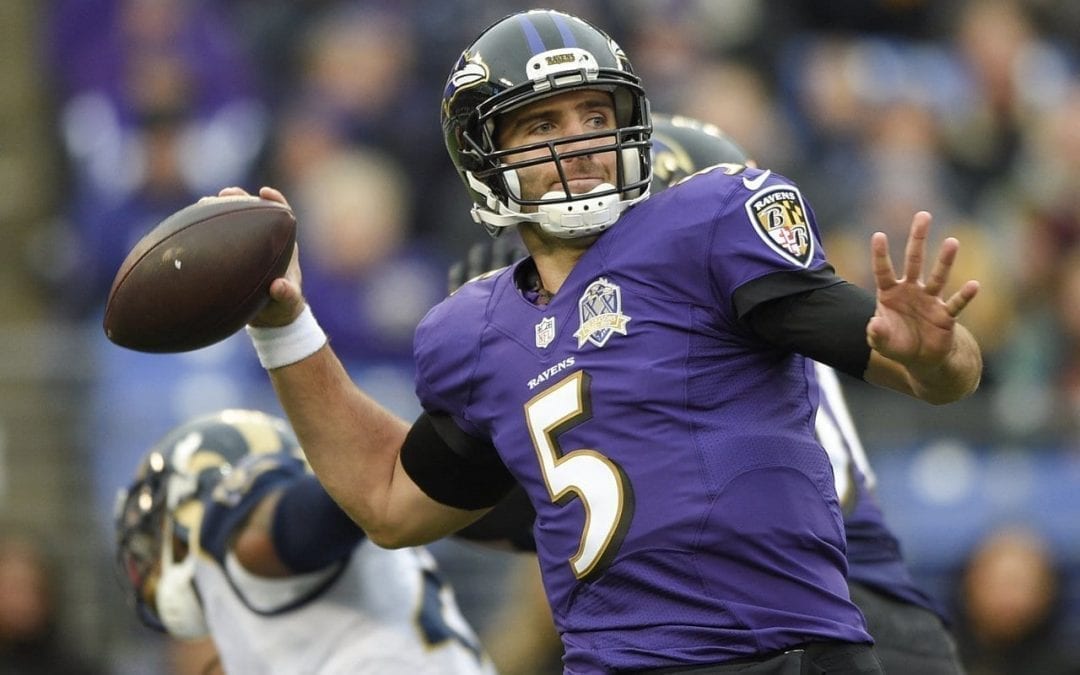
Meanwhile, Flacco enters the NFL’s down period without the worry of grueling rehab awaiting him. The nine-year veteran didn’t play his best football in 2016 — he registered some of the worst marks of his career in touchdowns percentage (3.0), adjusted yards per attempt (6.0), and first-down performance (5:7 touchdown-to-interception ratio, 79.2 passer rating). Still, part of his statistical dip relates directly with to the quick turnaround from knee reconstruction as well as a depleted offensive line. Once he puts another offseason between him and the injury, the Ravens can realistically expect a better Flacco in 2017.
But Baltimore has more to look forward to than just healthier leading men. The team invested an entire season in rookie offensive linemen Ronnie Stanley and Alex Lewis, the starting tackle and guard respectively on the unit’s blind side. The tandem endured their fair share of issues during their first NFL campaigns, though nothing unusual for rookie blockers.
Yet early struggles provide a valuable learning experience to young linemen. Stanley looked improved during the final month of the season despite Lewis missing the entire month of December. All the while, Marshal Yanda remains one of the best offensive linemen in the league regardless of where the Ravens positioned him. The unit finished strong as a result, coming in at No. 8 in adjusted sack rate on the year.
On the other side of the ball, Baltimore has reestablished itself as one of the NFL’s top defensive teams. After multiple down years following the departures of Lewis, Reed and, later on, Haloti Ngata, the unit formed around the talented nucleus of Pro Bowl inside linebacker C.J. Mosley and stud defensive linemen Timmy Jernigan and Brandon Williams. The secondary still needs additional depth, especially at safety where safeties Eric Weddle and Lardarius Webb fall on the wrong side of 30. But the group has a solid, young foundation with which it can remain competitive for the foreseeable future.
Not everything looks perfect for the Ravens heading into next season. Lead wideout Steve Smith Sr. formally announced his retirement Friday, leaving a massive void in an already undermanned receiving corps. The front office must make difficult calls on pending free agents Williams, linebacker Zach Orr and right tackle Ricky Wagner. Additionally, Harbaugh’s decision to retain Marty Mornhinweg as coordinator and play caller too creates questions about the team’s offensive viability. Baltimore must address this issues over the course of the next seven months.
Still, those concerns rank higher on the football hierarchy of needs than the ones the franchise faced a year ago. This time around, the Ravens can plunge headfirst into the offseason armed with nearly $20 million of available cap space and a full allotment of draft picks with which to improve the roster. Even in a challenging AFC North, Baltimore has plenty of reason to feel better heading into this offseason than last.

Jason B. Hirschhorn is an award-winning sports journalist and Pro Football Writers of America member. He has bylines at NFL.com, SB Nation, Sports Illustrated, and other outlets.